
Embora as ferramentas de IA para UI prometam eliminar a tela em branco e acelerar a execução, seu valor real depende de quem as está usando e em que estágio. É por isso que avaliamos os principais criadores de IA para UI com base na fidelidade de saída, compatibilidade com o Figma, valor da camada gratuita, preços e eficiência geral do fluxo de trabalho.
tl;dr: Melhor Ferramenta de Design de IA para UI de 2026
Recursos do Gerador de IA de UI | Melhores exemplos |
Designer geral de UI/UX de IA | |
Designers de IA para UI baseados em prompt | |
Designers de IA para UI baseados em imagem | |
Designers de IA para UI nativos do Figma | |
Designers de IA para UI responsivos | |
Designers de UI para código |
O que é um Gerador de UI movido por IA
Um gerador de UI movido por IA é uma ferramenta que usa inteligência artificial para transformar a intenção do usuário em interfaces digitais funcionais. Esta intenção pode ser inserida na forma de prompts de texto, capturas de tela, esboços ou até mesmo uma estrutura de aplicativo existente. A saída pode ser UI editável de baixa a alta fidelidade. Para dispositivos móveis, desktop ou ambos simultaneamente. Muitos softwares criadores de IA para UI vão um passo além com recursos de entrega ao desenvolvedor via exportação para Figma, MCP e geração de código.
Essas modernas ferramentas de IA para UI visam permitir que até mesmo quem não é designer foque na ideação de design de aplicativo ou site ao invés de trabalho minucioso com pixels.
Ferramenta de IA para UI vs UX vs Wireframing
Embora sejam utilizados alternadamente, esses três termos (e consequentemente suas ferramentas) representam estágios de design distintos. Ferramentas de wireframing de IA focam em blueprints estruturais de baixa fidelidade. Ferramentas de UX de IA priorizam os fluxos de usuário e interatividade. Geradores de UI de IA lidam com a aparência, como cores, tipografia e iconografia.
As plataformas de design de IA mais recentes misturam elementos dos três, mas ainda são necessárias ferramentas especializadas para colaboração fácil, pesquisa profunda e saída pronta para produção.
Leia mais sobre Como Projetar uma Interface de Usuário Utilizando IA
Comparação de Ferramentas de Design de IA para UI
Ferramenta de IA para UI | Recurso Principal | Melhor Para | Plano Gratuito | Plano Pago |
Banani | UI/UX 360° + wireframing com exportação para MCP & código | Fundadores, PMs, criadores de MVP | 20 gerações/mês | $12/mês Individual, $17/mês/cadeira Equipe |
Uizard | Autodesigner 2.0 + mapas de calor de IA | Não-designers, ideação rápida | 2 projetos, 3 gerações de IA/mês | $12/mês usuário, $39/mês Negócio |
UX Pilot | Fluxos baseados em prompt + mapas de calor preditivos | Equipes de validação de UX | 7 telas, 45 créditos | $14/mês Padrão, $31/mês Equipe |
Google Stitch | UI impulsionada por Gemini + exportação de cópia para Figma | Rascunhos rápidos de UI, estruturação de dev | 350 Gerações Padrão + 200 Experimentais | Sem plano pago |
Visily | Esboço/captura de tela para UI editável | Oficinas, wireframing inicial | 2 quadros, 300 créditos de IA | $11/usuário/mês Pro |
Miro AI | Notas adesivas para diagramas de UI estruturados | Planejamento entre equipes | 3 quadros (sem Protótipo de IA) | $8/mês Starter, $20/mês Negócio |
Figma Make | Criação de UI editável no Figma a partir de prompt de texto | Equipes de design no Figma | Não disponível na camada gratuita | $16/mês Pro (3.000 créditos de IA) |
Relume AI | Gerador de mapa do site + wireframe de IA | Sites de marketing | Projeto de 1 página com capacidade de IA limitada | $18/mês Starter, $40/mês Pro |
Framer | Prompt para site responsivo ao vivo | Páginas de destino, implementação ao vivo | Grátis com subdomínio | $10/mês Básico, $30/mês Pro |
Webflow | Construtor de sites de IA com CMS de produção | Sites de marketing escaláveis | 2 páginas, IA limitada | $14/mês Básico, $23/mês CMS |
Builder.io | UI para código semântico de frontend | Equipes de dev, frameworks JS | 6 usuários, 60 Créditos de Agente | $24/mês usuário, $40/mês Equipe |
Locofy | UI para exportação de código pronto para frameworks | Equipes de dev frontend | Conversão de IA limitada | $0,40/token ou $399/ano Starter |
* Nota: Os planos de preços mensais são mais caros para cada ferramenta, e algumas delas possuem um plano de assinatura adicional para grandes equipes e complementos.
Banani: 360° AI UI/UX & Wireframing
Populár por projetar UI incríveis com IA, Banani é um copiloto de IA para UI de alta fidelidade. Ideal para PMs e fundadores não-designers que desejam adaptação de marca e variações de layout — para dispositivos móveis e UI de aplicativo.
Você pode começar com um prompt, ou optar pela geração de UI a partir de captura de tela, e então entregar o design a um desenvolvedor via Figma, seu MCP, ou uma simples exportação de código com um clique.
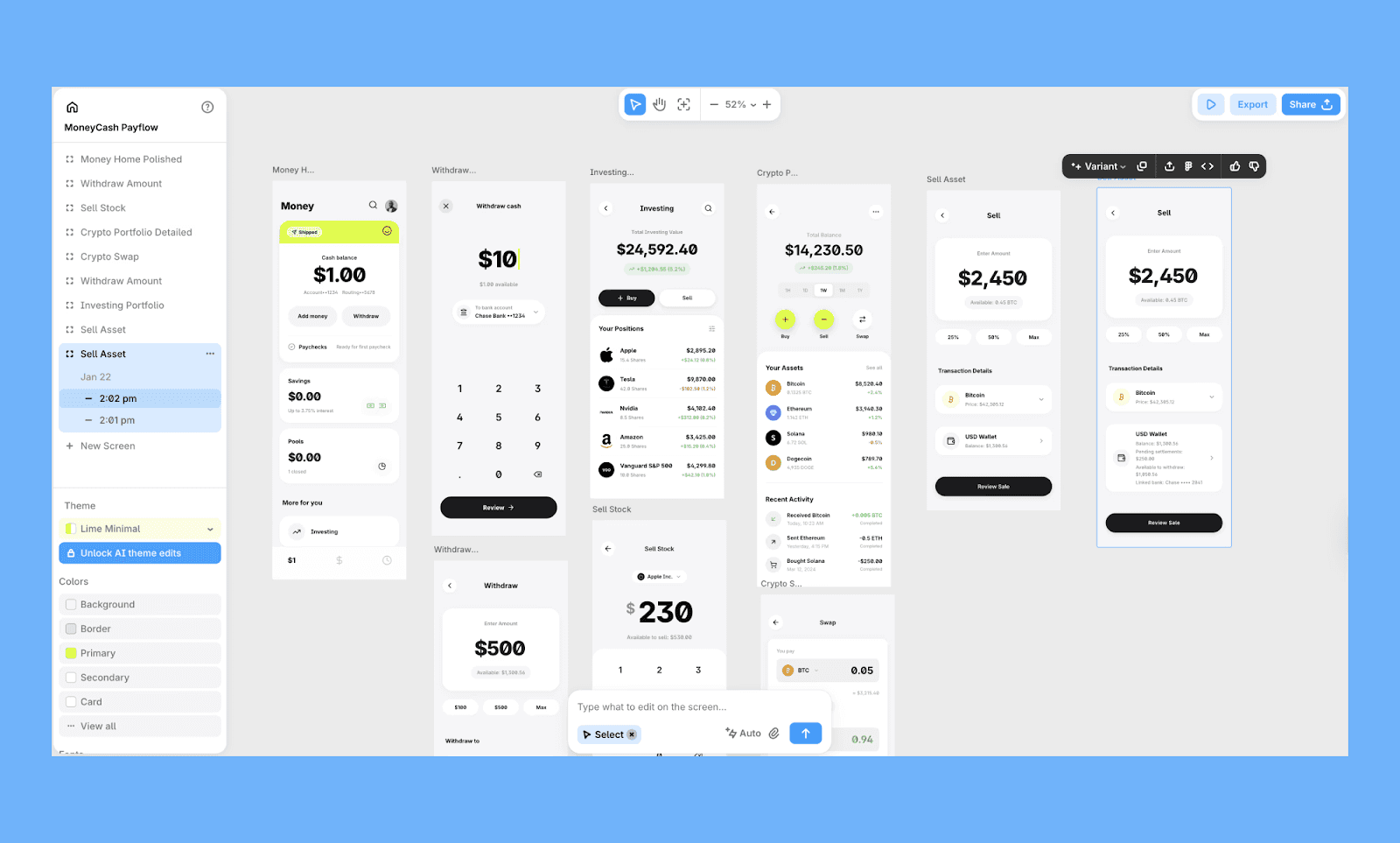
Recursos principais do designer de Banani AI UI
Gerar até 5 variantes de fluxos de UI a partir de um prompt/imagem
Criar designs para desktop e dispositivos móveis na mesma tela
Exportar para Figma ou código pronto para produção com um clique
Regenerar seções/elementos de um design
Conectar a agentes de codificação de IA via suporte MCP
Melhor caso de uso de Banani
Fundadores validando ideias de produtos sem equipes de design
PMs construindo demos de MVP detalhados rapidamente
Startups iterando conceitos de UI antes do desenvolvimento
Preço do Banani
Plano gratuito: 20 gerações gratuitas por mês. Edições limitadas.
Plano pago: Plano individual começa em $12/mês (faturado anualmente) com 100 créditos. Plano de equipe a partir de $17/mês/cadeira (faturado anualmente).
Melhores Designers de IA para UI Baseados em Prompt
Uizard
Uizard é uma ferramenta líder de prototipagem movida por IA, projetada para ideação rápida. Utilizando seu mecanismo "Autodesigner 2.0", transforma prompts de texto simples ou esboços desenhados à mão em mockups editáveis e com várias telas, tornando-se uma escolha popular para não-designers e equipes de produtos ágeis.
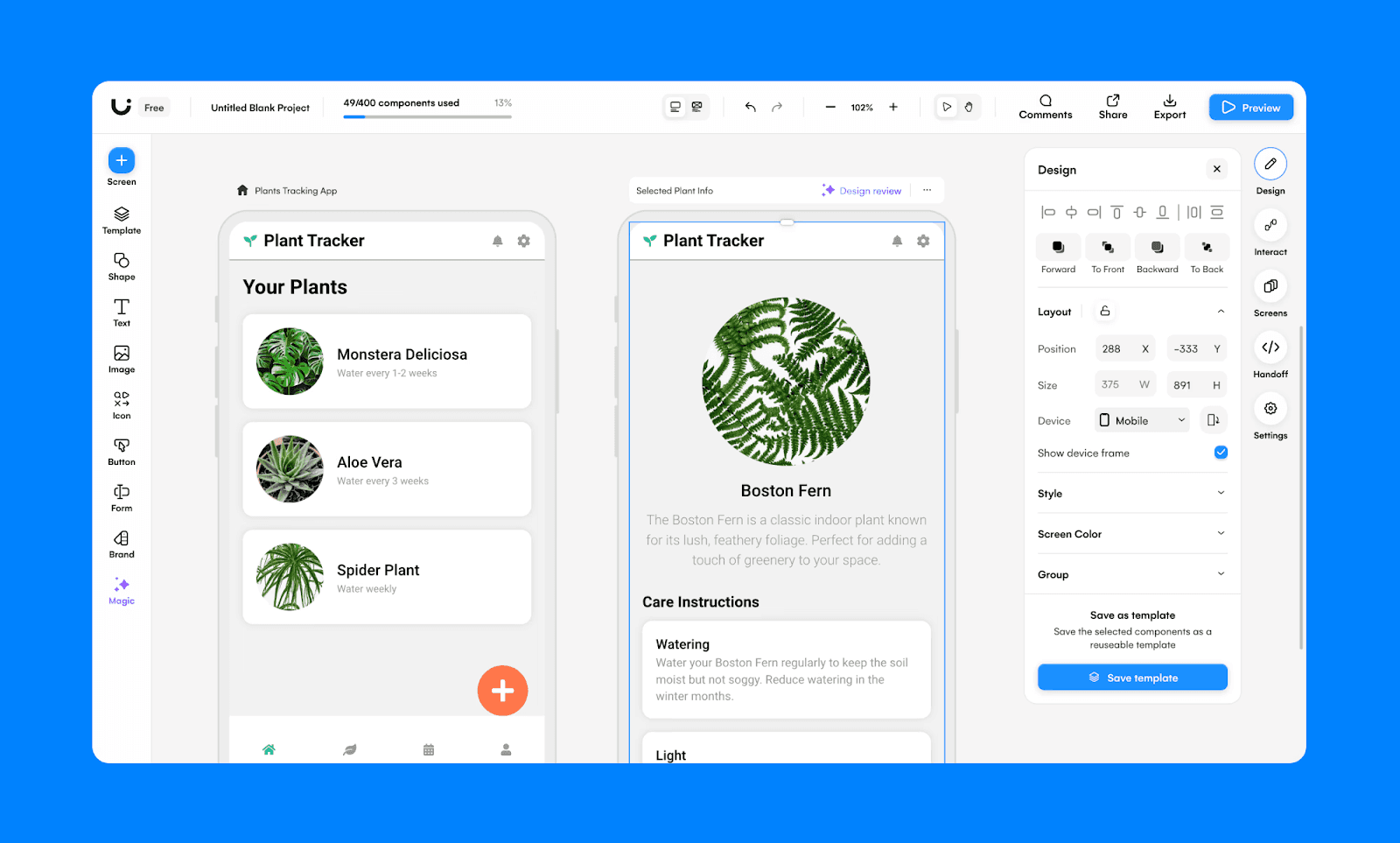
Recursos principais do designer de Uizard AI UI
Gerar projetos com várias telas e temas a partir de um único prompt de texto
Transformar esboços desenhados à mão ou capturas de tela em mockups de UI editáveis
Criar mapas de calor de IA para prever a interação do usuário com o Focus Predictor
Aplicar estilos de marca consistentes em seu projeto usando um URL ou uma imagem
Colaboração em tempo real e ferramentas de ajuste por arrastar e soltar
Melhor caso de uso do Uizard
Visualização rápida de UI para fundadores sem experiência em design
Criação de protótipo em estágio inicial por PMs para alinhar equipes e partes interessadas
Preço do Uizard
Plano gratuito: Inclui 2 projetos, 10 modelos, e 3 gerações de IA por mês
Plano pago: Plano individual começa em $12/mês/usuário (faturado anualmente) para 100 projetos e 500 gerações de IA. Plano de negócios a partir de $39/mês/cadeira (faturado anualmente).
UX Pilot
UX Pilot é uma plataforma de IA para UI e UX construída para equipes que se importam tanto com a estrutura quanto com os visuais. Ele se destaca ao entender prompts complexos e multicamadas para gerar fluxos de tela logicamente conectados e wireframes. Também combina geração de tela de alta fidelidade com mapas de calor preditivos, análise de usabilidade e criação de fluxo estruturado.
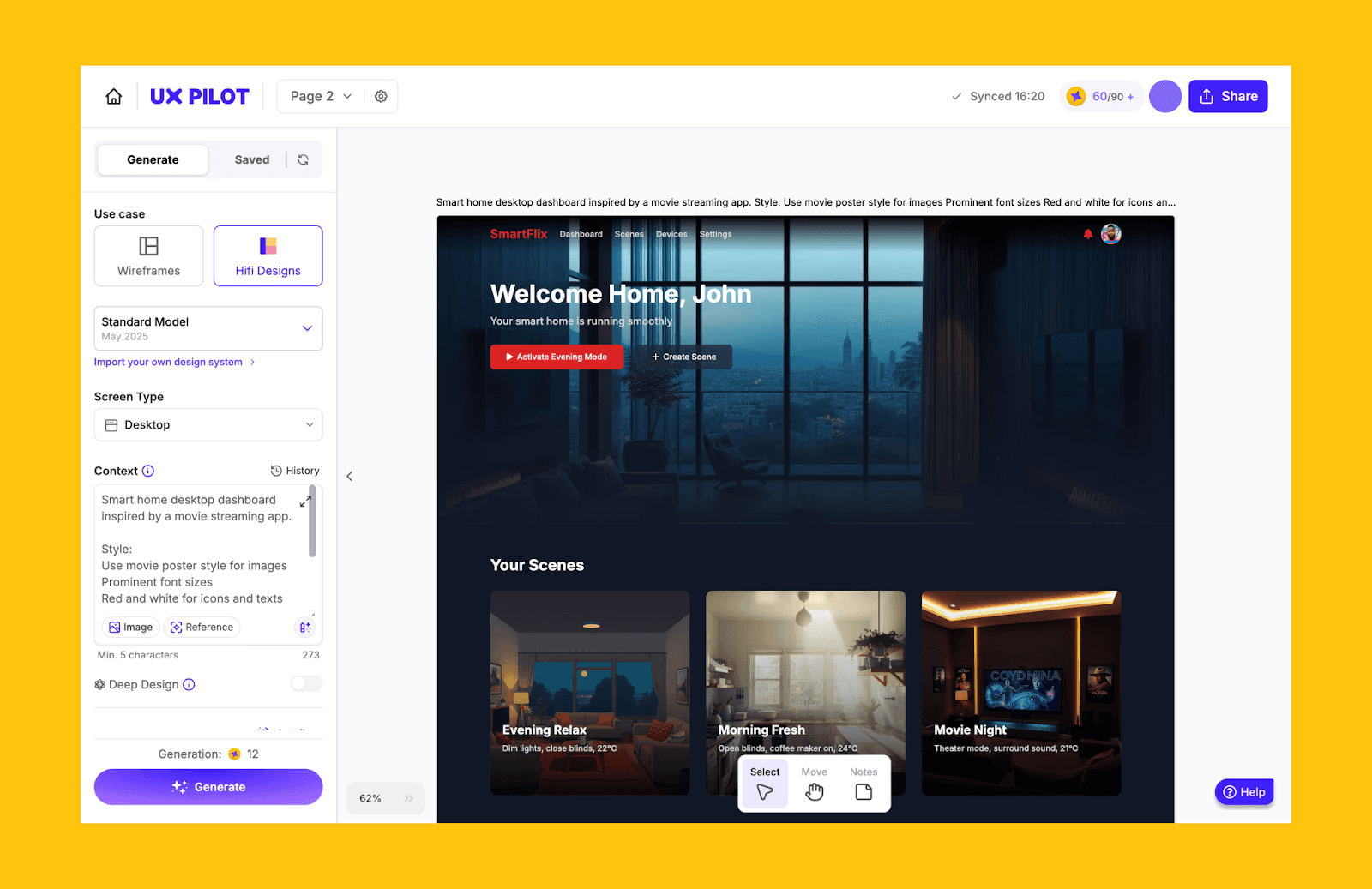
Recursos principais do designer de UX Pilot AI UI
Criar jornadas de usuário conectadas a partir de um único prompt
Iterar em seções específicas de uma tela usando prompt de texto
Simular atenção do usuário com mapas de calor movidos por IA
Examinar designs em busca de questões de acessibilidade e conformidade com WCAG
Exportar para Figma ou gerar código pronto para frontend
Melhor caso de uso do UX Pilot
Equipes de produto validando decisões de UX antes do desenvolvimento
Designers que procuram insights de usabilidade junto com a geração de UI
Agências defendendo decisões de design com visuais respaldados por dados
Preço do UX Pilot
Plano gratuito: Até 7 telas. 45 créditos oferecidos uma vez
Plano pago: Plano padrão a $14/mês (faturado anualmente) para 70 telas e 420 créditos no total. Plano de equipe começa a $31/mês/usuário (faturado anualmente).
Google Stitch (anteriormente Galileo AI)
Google Stitch é um gerador de IA para UI movido por Gemini focado em criação rápida de telas e exportação leve para frontend. Originalmente lançado como Galileo AI e agora integrado ao ecossistema do Google, Stitch transforma prompts de texto ou imagens de referência em UI web e móvel editável.
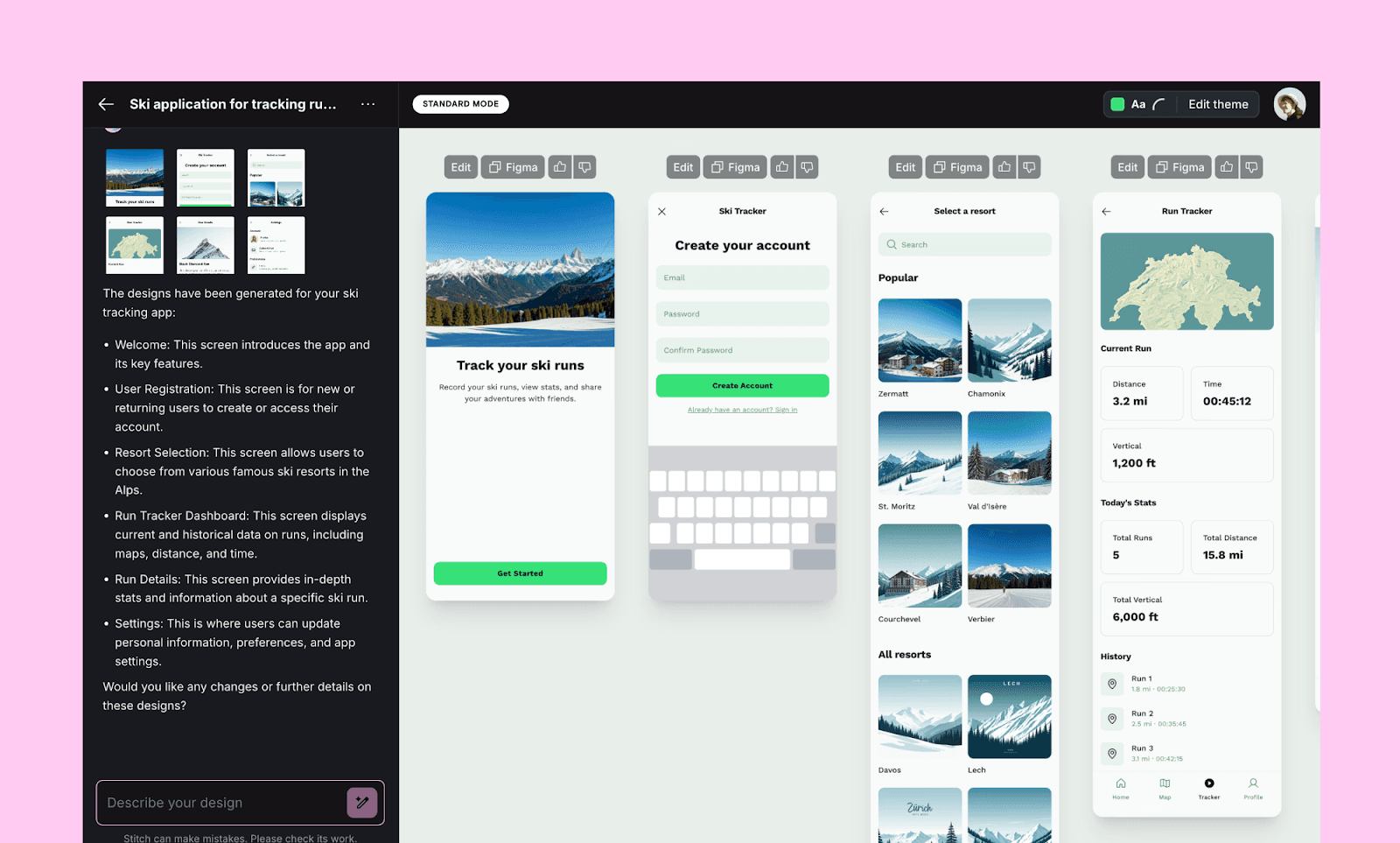
Recursos principais do designer de Google Stitch AI UI
Escolher entre modos Padrão (rápido) & Experimental (alta qualidade)
Gerar UI móvel e web a partir de prompts de texto simples
Converter capturas de tela ou esboços em layouts estruturados
Um clique "Copiar para Figma" para exportação editável no Figma
Gerar código HTML/CSS & Tailwind para entrega ao frontend
Melhor caso de uso do Google Stitch
Ideação de produto em estágio inicial e rascunhos rápidos de UI
Desenvolvedores que precisam de estruturação básica para frontend rapidamente
Preço do Google Stitch
Plano gratuito: Cota mensal de 350 gerações padrão e 200 gerações experimentais
Plano pago: Sem plano pago.
Leia sobre Alternativas ao Google Stitch >
Melhores Designers de IA para UI Baseados em Esboço
Visily
Visily é uma ferramenta de design de UI assistida por IA construída para equipes sem profunda expertise em design. Com uma grande biblioteca de templates pré-construídos e editor intuitivo, Visily ajuda fundadores, PMs e equipes multifuncionais a visualizar rapidamente ideias de produtos sem precisar dominar softwares de design complexos.
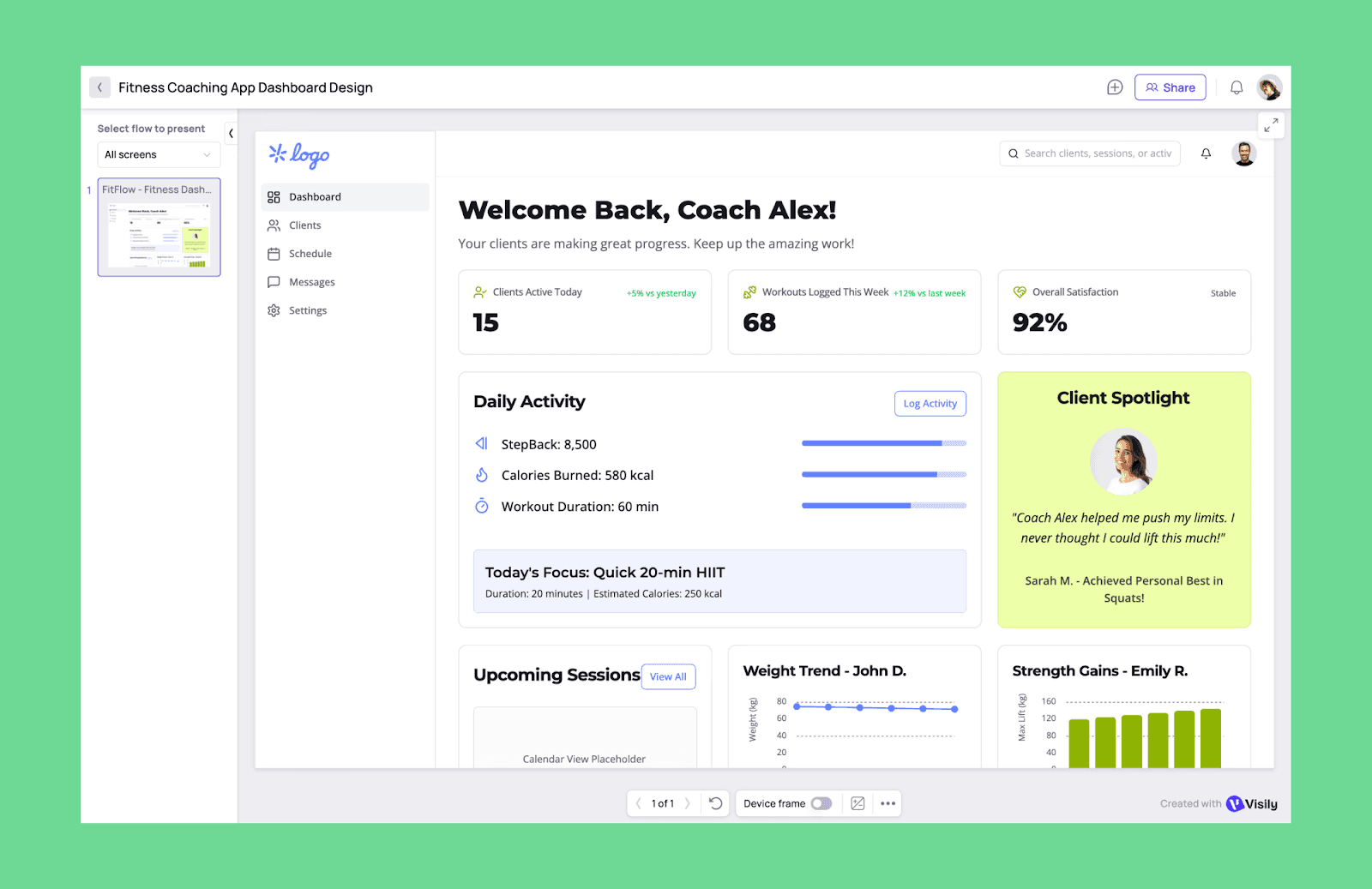
Recursos principais do designer de Visily AI UI
Converter imagens ou capturas de tela em telas de UI
Transformar esboços desenhados à mão em wireframes digitais
Alternar entre modos de wireframe e alta fidelidade no mesmo quadro
Extrair estilos de marca consistentes, fontes e cores de um URL ou imagem
Arrastar e soltar a partir de uma extensa biblioteca de mais de 1.500 templates
Melhor caso de uso do Visily
Discussões de produtos que requerem rápida alinhamento visual
Treinadores conduzindo workshops colaborativos de design
Preço do Visily
Plano gratuito: 2 quadros editáveis e 300 créditos de IA/workspace/mês
Plano pago: Pro a $11/usuário/mês (faturado anualmente) com quadros ilimitados e 3.000 créditos de IA/editor/mês.
Miro AI
Miro AI estende o quadro branco colaborativo do Miro para wireframing movido por IA e ideação de interface. Ajuda equipes a converter suas ideias rascunhadas, notas adesivas e diagramas em um quadro do Miro em layouts básicos de UI. Você também pode carregar imagens de referência e prompts para editar a UI em um design interativo com várias telas.
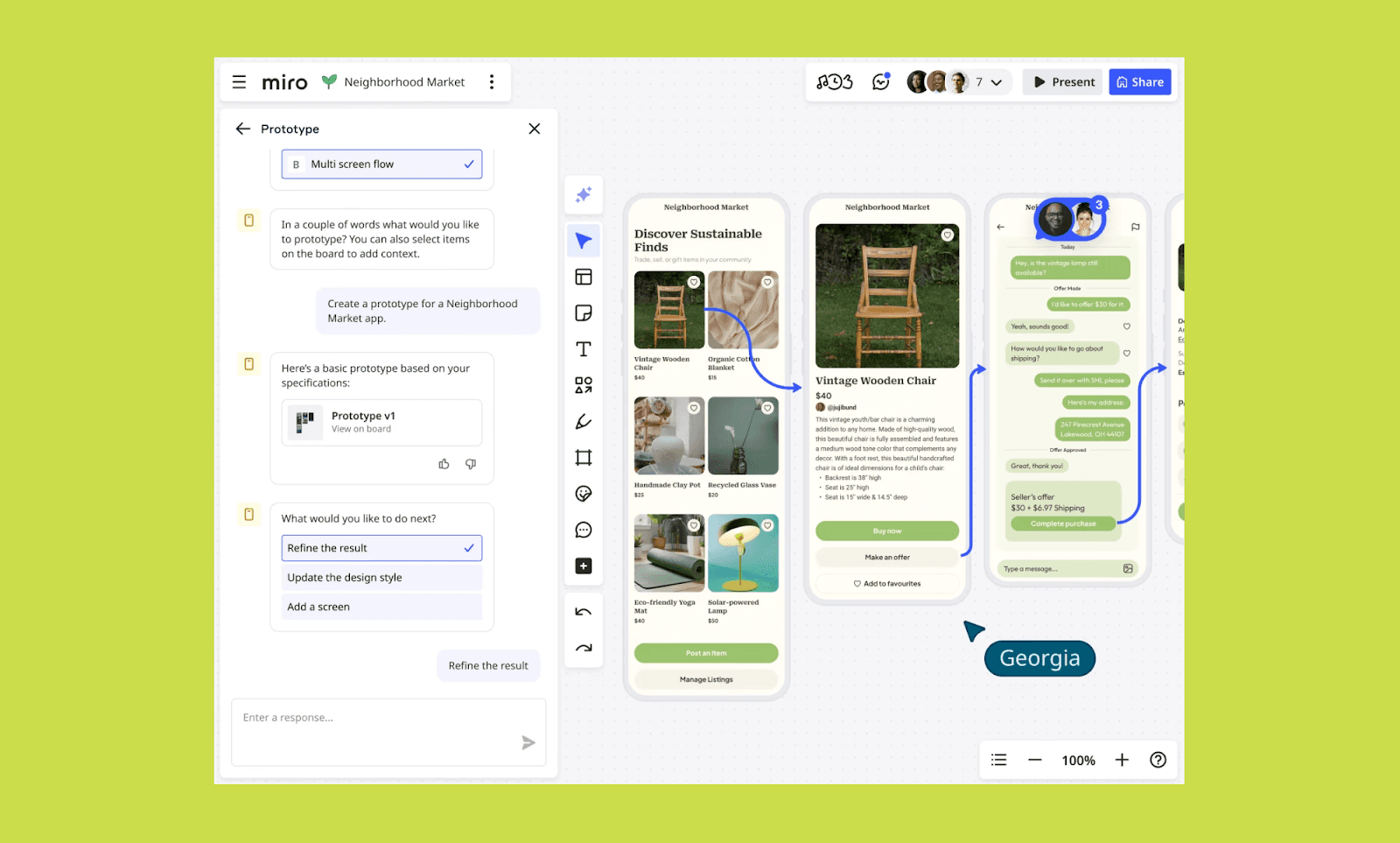
Recursos principais do designer de Miro AI UI
Converter notas adesivas e fluxogramas em diagramas estruturados
Agentes de IA Especializados para consultoria de UI/UX
Criar mapas de jornadas de usuário e protótipos baseados em fluxo
Colaboração em tempo real com comentários e cursos ao vivo
Integrar com Figma, Jira e outras ferramentas de produto
Melhor caso de uso do Miro AI
Alinhamento entre equipes multifuncionais ao longo do desenvolvimento de produto
Sintetizar transcrições de entrevista e feedback de usuários em design de UI
Planejamento de estrutura em estágio inicial antes de ferramentas de UI de alta fidelidade
Preço do Miro AI
Plano gratuito: Um workspace com 3 quadros, mas sem recurso de Protótipo de IA
Plano pago: Plano Starter de $8/mês/usuário inclui créditos limitados de Prototipos Miro
Para mais créditos, opte pelo Plano de Negócios a $20/mês/usuário ou o plano Enterprise
Melhores Designers de IA para UI Nativos do Figma
Figma Make
Figma Make é a suíte de IA nativa do Figma, impulsionada por modelos como Claude 3.7. Integrada profundamente dentro do ecossistema Figma, Make acelera a criação desde uma ideia inicial até uma interface polida sem sair do espaço de trabalho de design. Suporta prompts para design de UI, criação de componentes, camadas editáveis, fluxos interativos e mais.
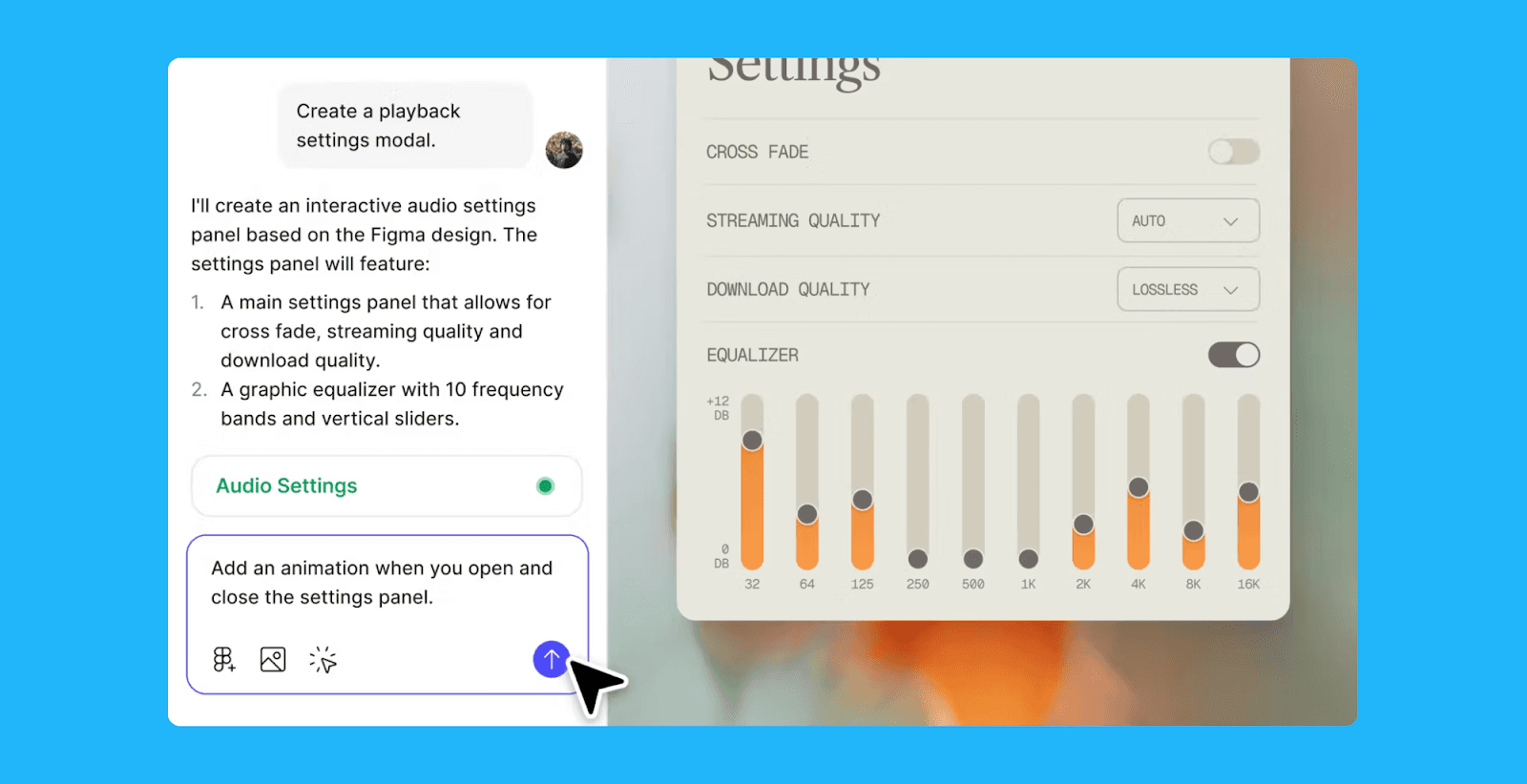
Recursos principais do designer de Figma Make UI
Transformar prompts de texto em designs e wireframes editáveis, com várias telas
Vincular automaticamente designs estáticos em protótipos clicáveis interativos
Editar e refin ar saída de IA como camadas nativas do Figma
Construir sites ou aplicativos responsivos para pré-visualizar sem codificar
Pesquisar toda a biblioteca da sua equipe usando capturas de tela ou descrições
Melhor caso de uso do Figma Make
Designers esboçando conceitos de UI de alta fidelidade com iterações rápidas
Equipes de produto transformando ideias em protótipos interativos rapidamente
Equipes usando sistemas de design compartilhados para saída consistente
Preço do Figma Make
Plano gratuito: Figma Make não está disponível na camada gratuita ou plano Starter do Figma.
Plano pago: Plano Profissional ($16/mês faturado anualmente) inclui Figma Make com 3.000 créditos de IA/mês. Planos de Organização e Enterprise, respectivamente, custam $55 e $90 por mês e são faturados anualmente.
Leia sobre Alternativas ao Figma Make >
Relume AI
Relume AI é uma ferramenta de design de sites focada em IA que gera mapas do site estruturados, wireframes e layouts de UI a partir de prompts simples. Construída principalmente para designers web e agências, combina geração de IA com uma grande biblioteca de componentes mapeados para componentes reais do Figma.
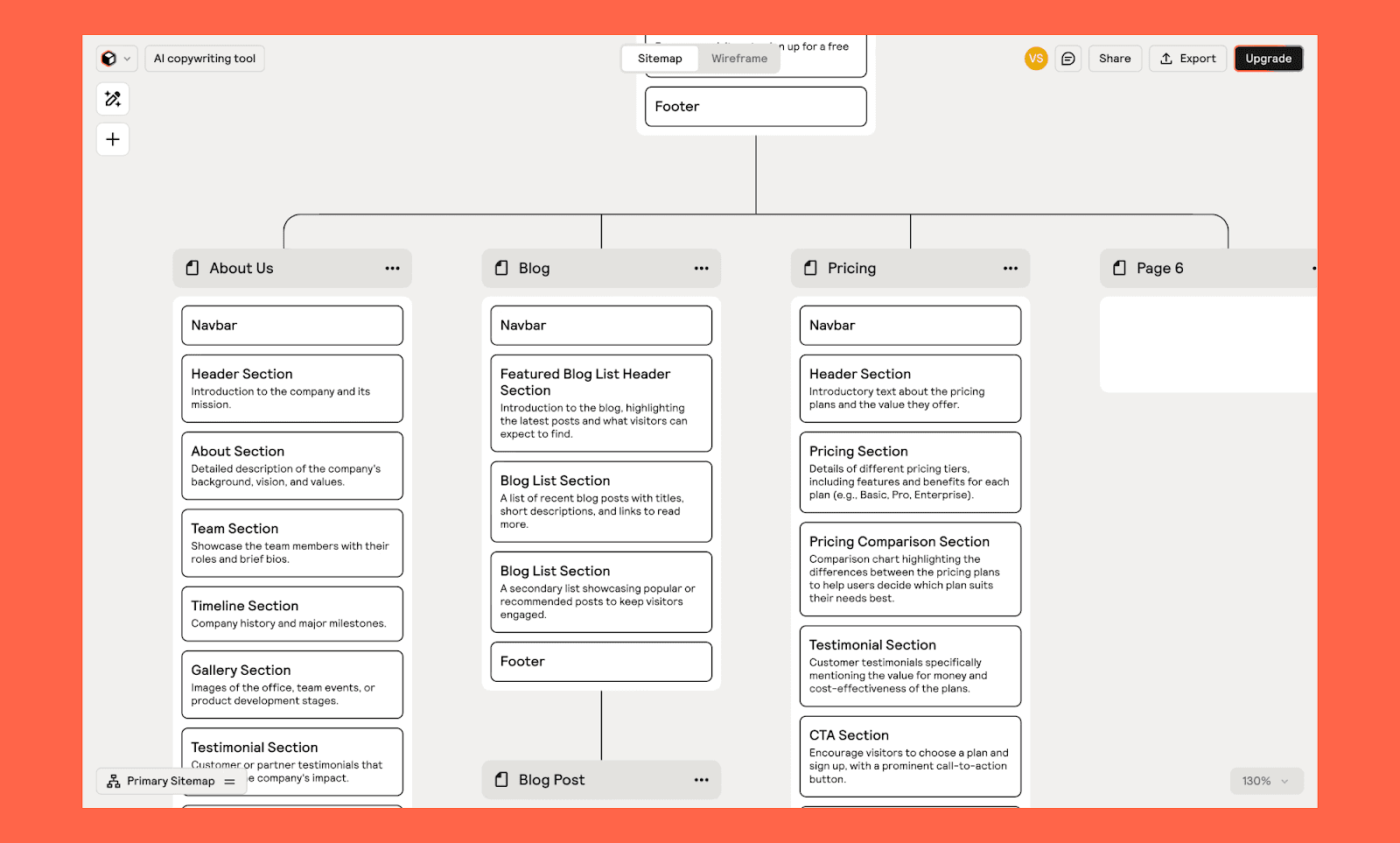
Recursos principais do designer de Relume AI UI
Gerar a arquitetura de informação de um site inteiro
Definir um sistema de design global (tipografia, cores e espaçamento)
Populate wireframes com texto contextual e consciente de marca
Copiar e colar layouts no Figma e Webflow sem esforço
Melhor caso de uso do Relume AI
Designers web criando rapidamente sites de marketing estruturados
Agências produzindo sistemas SaaS escaláveis ou de landing pages
Equipes alinhando mapa do site, wireframe e UI em um fluxo de trabalho
Preço do Relume AI
Plano gratuito: 1 projeto de 1 página, e mais de 1.000 componentes do Figma
Plano pago: Plano Starter custa $18/mês (faturado anualmente) e inclui 1 projeto de 5 páginas. Replume Pro ($40/mês) e plano de equipe ($36/mês/cadeira, mínimo de 3 cadeiras) oferecem projetos ilimitados com páginas ilimitadas.
Designers de IA para UI Responsivos
Framer
Framer é uma potência para fluxos de trabalho de design para publicação, preenchendo a lacuna entre design de UI de alta fidelidade e sites responsivos ao vivo. Ao contrário das ferramentas tradicionais de prototipagem, Framer usa um editor visual de nível profissional que gera código real e pronto para produção, permitindo que você lance sites totalmente funcionais diretamente da sua tela.
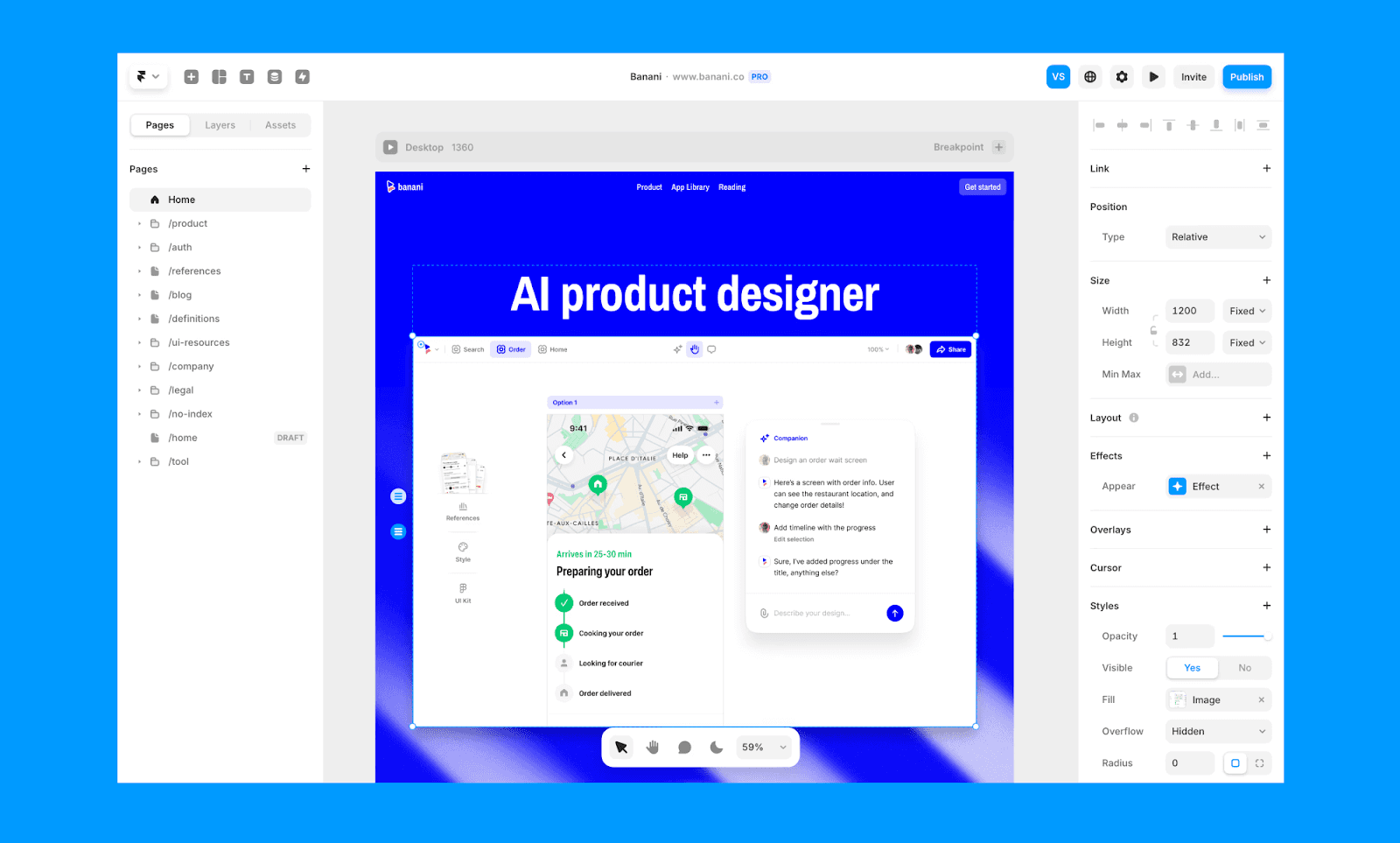
Recursos principais do designer de Framer AI UI
Gerar layouts e estruturas de páginas responsivas inteiras a partir de um prompt
O layout é automaticamente cascado em visualizações de desktop, tablet e móvel
Gerar componentes personalizados usando um assistente de código movido por IA
Criar interações avançadas como transformações 3D e estados de hover
Publicar instantaneamente com hospedagem, SEO, e otimização de performance
Melhor caso de uso do Framer
Fundadores lançando páginas de destino sem desenvolvedores
Designers que precisam de deployment de design para ao vivo em uma ferramenta
Preço do Framer
Plano gratuito: Inclui um subdomínio Framer, 1k páginas, e recursos básicos de IA
Plano pago: Plano Básico começa em $10/mês/site (faturado anualmente) para domínios personalizados. Plano Pro a $30/mês/site adiciona staging, CMS, e análises avançadas.
Explore Templates Gratuitos do Framer >
Webflow
Webflow evoluiu de um construtor visual de sites para uma Plataforma de Experiência de Sites com IA abrangente. Além de gerar mockups de UI assistidos por IA, também monta sites de múltiplas páginas prontos para produção construídos no Flowkit (um framework modular CSS), garantindo que seu site permaneça estruturado, escalável e totalmente responsivo desde o primeiro prompt.
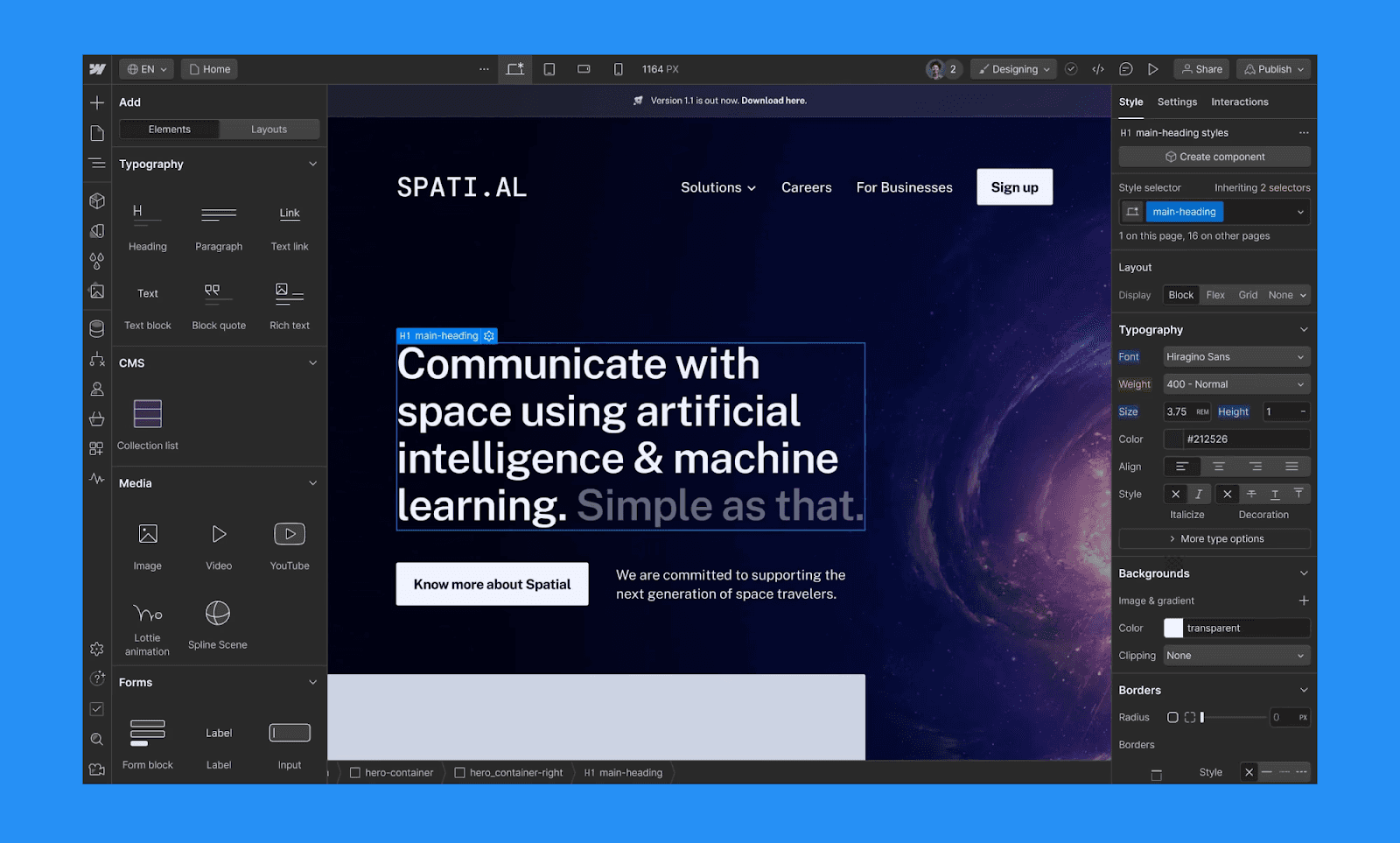
Recursos principais do designer de Webflow AI UI
Gerar seções de página responsivas a partir de prompts estruturados
Reestruturação de seções baseada em chat para melhor responsividade
Auditar automaticamente o conteúdo do site e gerar marcação de esquema
Converter layouts diretamente em HTML/CSS pronto para produção
Publicar sites ao vivo com hospedagem e CMS embutido
Melhor caso de uso do Webflow
Equipes construindo sites de marketing ou CMS escaláveis
Fundadores construindo ferramentas que requerem design visual e lógica funcional
Designers que querem controle total de responsividade antes do lançamento
Preço do Webflow
Plano gratuito: Inclui um domínio webflow.io, 2 páginas, 50 itens CMS, e acesso limitado ao Construtor de Sites com IA
Plano pago: Plano Básico começa em $14/mês (faturado anualmente) para domínios personalizados. Plano CMS a $23/mês inclui 2.000 itens CMS e ferramentas de SEO/AEO movidas por IA. Plano de Negócios a $39/mês para capacidades de IA avançadas.
Leia a Comparação entre Framer e Webflow >
Designers de IA para UI de Código
Builder.io
Builder.io é uma plataforma de desenvolvimento de IA para UI que transforma o tradicional "handoff" em um fluxo de trabalho contínuo. Sua ferramenta Visual Copilot utiliza um compilador impulsionado por IA para transformar designs do Figma em código limpo e semântico para qualquer grande framework de frontend, permitindo que equipes lancem UIs prontas para produção em minutos, ao invés de dias.
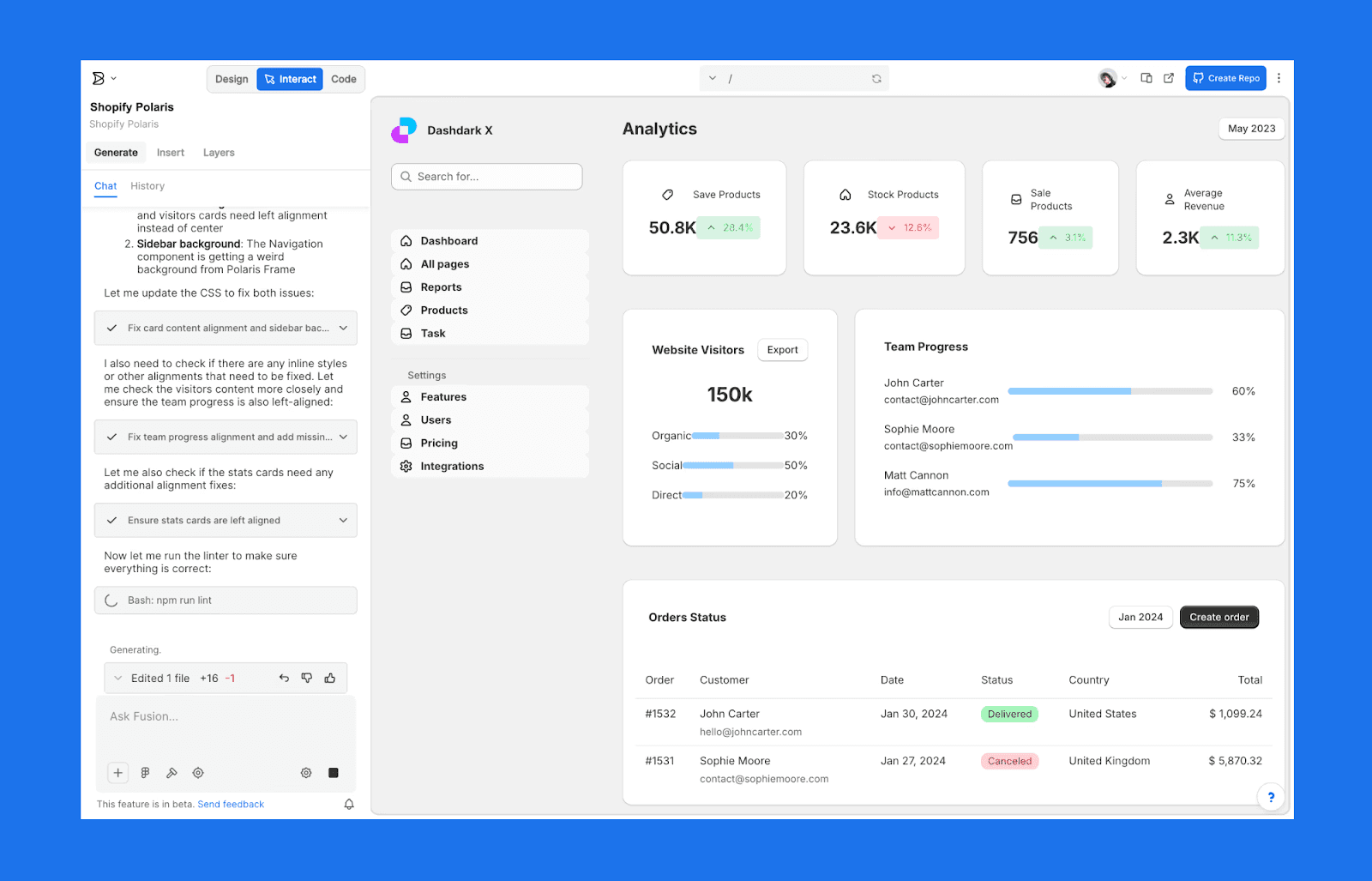
Recursos principais do designer de Builder.io AI UI
Conversão com um clique de designs do Figma em código de alta qualidade
Interpretar arquivos de design plano e gerar layouts totalmente responsivos
Iterar no código gerado usando prompts de linguagem natural
Um IDE visual (atualmente em beta) que se conecta diretamente ao seu código-base
Exportar componentes limpos React, Vue, Angular, ou Qwik
Melhor caso de uso do Builder.io
Desenvolvedores que querem UI assistida por IA sem perder controle de código
Equipes de produto trabalhando com frameworks modernos de JavaScript
Empresas que precisam de edição visual sobreposta ao código de produção
Preço do Builder.io
Plano gratuito: Inclui até 6 usuários e 60 agentes de crédito mensais
Plano pago: Começa em $24/mês por usuário (faturado anualmente) para 500 créditos mensais de agente por usuário. Suporta até 5 usuários. Para mais cadeiras, opte pelo plano de equipe a $40/mês por usuário (faturado anualmente).
Locofy
Locofy é uma ferramenta de design para código focada em desenvolvedores que converte designs do Figma, Penpot e Adobe XD em código de frontend pronto para produção. Em vez de gerar UI desde o zero, a força do Locofy reside em traduzir designs hi-fi existentes em código estruturado React, Next.js, HTML/CSS, ou outros baseados em framework com lógica responsiva embutida.
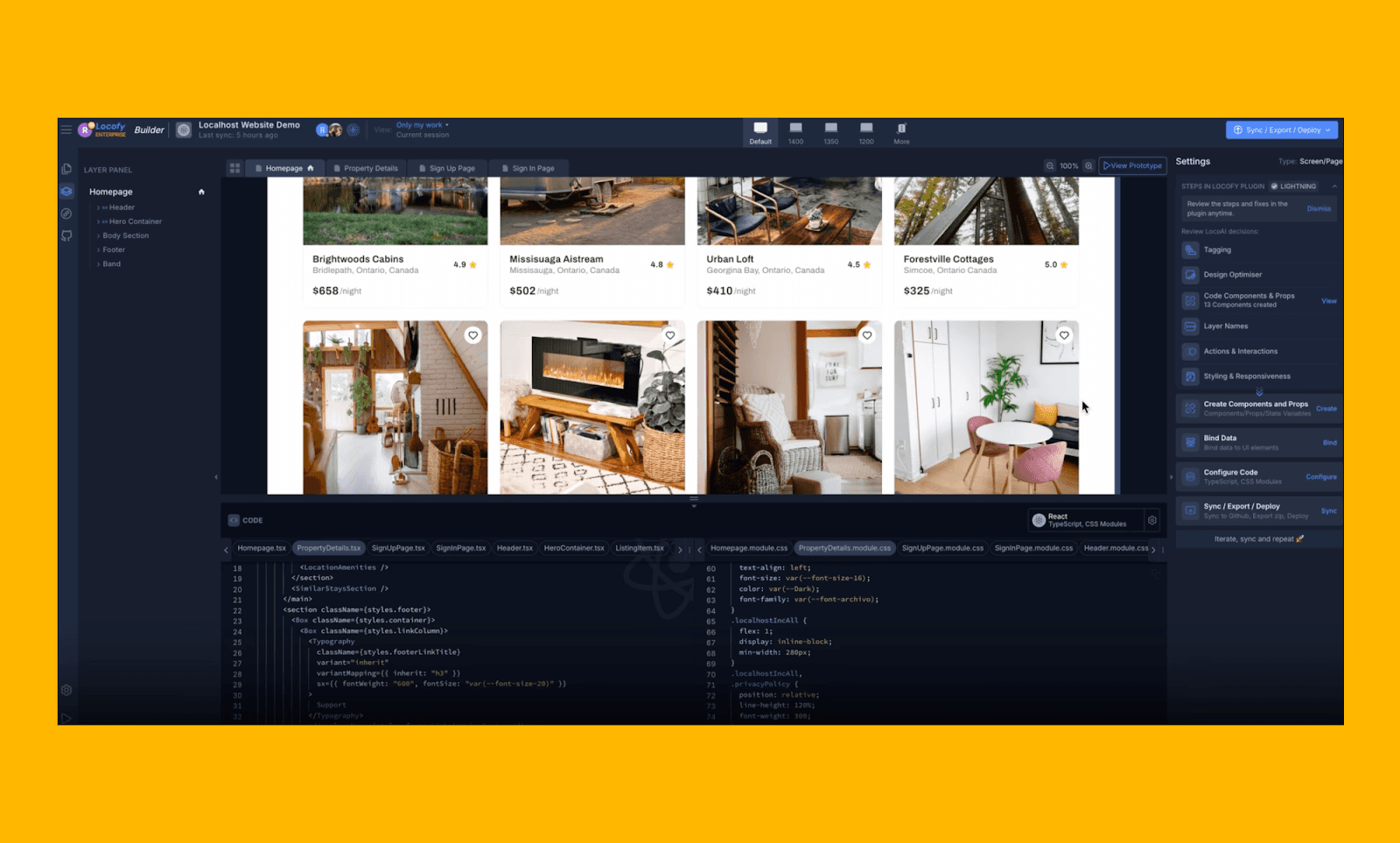
Recursos principais do designer de Locofy AI UI
Recurso de fluxo relâmpago converte camadas do Figma em código front-end extensível
Adapta-se inteligentemente designs para múltiplos tamanhos de tela
Conecta-se às suas bibliotecas de componentes GitHub, Storybook, ou personalizadas existentes
Veja seus designs rodando em código real ao vivo antes de exportar
Gerar saída React, Next.js, Gatsby, ou HTML/CSS comum
Melhor caso de uso do Locofy
Desenvolvedores convertendo designs de UI aprovados em código funcional
Equipes reduzindo tempo de construção manual de frontend
Startups movendo de mockups do Figma para MVP mais rápido
Preço do Locofy
Plano gratuito: Inclui conversão básica de design para código com recursos limitados de IA
Plano pago: Modelo de Pagamento Conforme Uso em $0,40 por token. Plano Starter $399/ano para ~2.5k tokens. (Tokens são consumidos com base na altura da tela e complexidade.)
Leia sobre os 2026 Melhores Ferramentas de Design para Código Missão por IA >
O Figma é Suficiente para Design de UI por IA?
Sim, mas com ressalvas. Os recursos nativos de IA do Figma, como Figma Make, ajudam a acelerar a geração de layouts, atualizações de texto, e prototipagem básica diretamente dentro do seu fluxo de trabalho existente. Excelente para colaboração e alternância de contexto para equipes habilidosas no ambiente Figma.
No entanto, sua IA ainda está evoluindo. A geração complexa de várias telas ou fluxos avançados de imagem para UI normalmente requer plugins de UI no Figma ou ferramentas especializadas de IA para UI.
Leia mais sobre Alternativas ao Figma Make: Gratuitas & Pagas >
Como Escolher o Melhor IA para UI/UX?
Com tantas ferramentas de IA para UI em 2026, a escolha certa depende mais da adequação da capacidade do que da publicidade. Você pode usar os pontos abaixo como uma checklist para escolher a melhor ferramenta de IA para UI e avaliar o que realmente importa para o seu fluxo de trabalho:
Capacidade de prompt para wireframe: Comece verificando se a ferramenta pode gerar layouts estruturados e com várias telas a partir de prompts de texto simples.
Conversão de esboços: Se você ideia visualmente, procure uma IA que converte esboços desenhados à mão ou capturas de tela em UI editável.
Colaboração: Priorize edição compartilhada, comentários, e compatibilidade de sistema de design para um alinhamento suave da equipe.
Integrações: Verifique a exportação para Figma sem interrupções, suporte a frameworks de frontend, conectividade com GitHub, ou integrações de CMS que se encaixem na sua pilha existente.
Entrega de design: Se a velocidade para produção importa, avalie os recursos de exportação de código ou suporte a MCP.
Considerando ainda o orçamento, isso deve ajudá-lo a reduzir as opções para algumas. Então, teste os recursos das ferramentas que você mais usará para finalizar a ferramenta de IA para UI melhor para você.
Veredito: Existe um ‘melhor’ IA para UI?
É subjetivo. Escolher o melhor IA para design de UI em 2026 envolve escolher a ferramenta que preenche a lacuna específica entre ideação e produção. O mercado evoluiu rapidamente de um construtor simples de UI para IA para interfaces de alta fidelidade com automação arquitetural profunda e recursos de entrega ao desenvolvedor.
Ainda assim, na maioria das vezes, ajuda a começar com algo simples e escalável. Por exemplo, com Banani, você pode carregar um esboço desenhado à mão para criar um wireframe de baixa fidelidade, depois convertê-lo em um design de UI de alta fidelidade com prompts de texto, e finalmente exportar seu código para desenvolvimento.
Pronto para usar a ferramenta de Design de UI com IA certa para você em 2026? Comece gratuitamente!
Perguntas Frequentes sobre IA para Criação de UI
Qual IA é a melhor para Design de UI?
Banani AI é a melhor IA para design de UI, especialmente para projetos baseados em design. Para design de UI pronto para produção, opte pelo Framer, e Builder.io é ótimo para projetos de design sensíveis a código.
Como é usada a IA no design de UI?
A IA é usada no processo de design de UI para gerar layouts, componentes, sistemas de cores, e fluxos multi-tela diretamente de prompts, esboços, ou capturas de tela. Algumas ferramentas de IA para UI também podem auxiliar na iteração, responsividade, e entrega ao desenvolvedor.
O ChatGPT pode gerar design de UI?
Não, o ChatGPT não pode gerar design de UI. Mas pode sugerir ideias de layout, estrutura, e até mesmo HTML/CSS básico. Existem alguns prompts inteligentes para usar o ChatGPT no design de UI/UX.
Qual IA é melhor para codificação de UI?
Ferramentas de IA que oferecem exportação de código estruturado—como React, HTML, ou Tailwind—são mais adequadas para codificação de UI. A melhor escolha depende da sua pilha de frontend e fluxo de trabalho de entrega.
O Figma é a melhor ferramenta de design de UI?
O Figma continua sendo uma das ferramentas de UI mais populares devido à colaboração e força do ecossistema. No entanto, os recursos de IA do Figma ainda estão evoluindo comparados a geradores de UI com IA independentes.
Quais são as alternativas de IA ao Figma para design de UI?
Dependendo do seu caso de uso, Figma tem múltiplas alternativas de IA para UI. Por exemplo, Mobbin para ideação, Banani para wireframing, Lovable para prototipagem, e assim por diante.