
Base44 has quickly become a go-to option for people experimenting with AI-powered app building. It promises speed, flexibility, and that familiar vibe coding feeling where you prompt first and worry about structure later. If you enjoy vibe coding and turning prompts into working apps, Base44 is easy to like.
This guide covers 14 strong alternatives to Base44, grouped by category so you can scan, compare, and decide quickly.
Why Look for Base44 Alternatives
Popularity of such tools is part of a much bigger shift.AI-native development is becoming a default approach, not an experiment. Gartner's 2026 Strategic Technology Trends report projects that by 2030, 80% of organizations will operate with smaller, AI-augmented teams, while AI-native platforms will power 40% of enterprise applications, up from just 2% in 2025.

As this becomes the standard way to build software, teams start facing very practical questions and begin comparing options beyond Base44.
Common reasons teams look for alternatives include:
Credit or usage-based pricing that becomes hard to predict
Limited control over UI and visual polish
AI-generated apps that work for demos but need cleanup for production
Wanting designers involved before code exists
Needing AI assistance without fully abstracting the stack
The tools below approach these problems in different ways, depending on what you value most.
Our Top Picks
After testing 14 AI app builders, we can highlight three that stand out for specific workflows.
Best for UI-First Teams: Banani
Fixed pricing ($20–30/month) with no usage-based credits. Banani generates editable UI designs and prototypes that can be exported to Figma or HTML/CSS. It’s well-suited for teams that want to align designers, product managers, and developers on concrete UI decisions before development starts.
Best Full-Stack Alternative: Bolt.new
Closest to Base44's vibe coding feel, but with more code control. Handles frontend, backend, and deployment in-browser. Pricing starts around $25 per month, with usage-based scaling as projects and generation volume increase.
Best for Developers: Cursor
AI-powered code editor designed to work with existing codebases and development workflows. Rather than generating entire applications, it focuses on assisting with refactoring, debugging, and extending real production code. Pricing starts at $20 per month, with usage-based limits depending on AI features used.

Quick Comparison Table
Tool | Best Use Case | vs Base44 | Starting Price | Code Export | Best For |
|---|---|---|---|---|---|
Base44 | Prompt-based app generation | Benchmark | $20/month, credit system | Yes, on paid plans | Founders, developers |
Banani | AI UI design & prototyping | No backend, focuses only on UI/UX design | $20/month, fixed | HTML/CSS, Figma | Designers, founders, product teams |
Bubble | No-code web apps | More visual control, steeper learning curve. AI chat exists, but the core build experience is visual. | $29/month for mobile only, $59 for web & mobile | Limited | Non-technical founders, teams |
Replit | AI-assisted coding | Real IDE with code visibility, not fully managed | $20/month, credit system | Yes | Developers |
Lovable | Prompt-first prototypes | Similar AI approach, uses Supabase for backend | $25/month, credit system | Limited | Founders |
Bolt.new | Full-stack vibe coding | More code control, browser-based like Base44 | $25/month, credit system | Yes | Founders, developers |
a0.dev | Mobile app generation | Mobile-first (iOS/Android), not web-focused | $20/month,credit system | Yes | Mobile founders |
Glide | Data-driven apps | Spreadsheet-based, simpler but less flexible | $25/month | Limited | Non-technical founders |
Retool | Internal tools | More database/API focused, not AI-generated | $10/user/month | Limited | Engineering teams |
Vercel v0 | AI UI components | Frontend only, no backend or database | $20/month | Yes | Developers |
MagicPatterns | Design system UI | UI components only, not full apps | $19/month, credit system | Figma | Design teams |
Builder.io | Visual development | CMS + visual editor, integrates with existing code | $25/month, credit system | Yes | Product teams |
Stitch | AI design generation | UI mockups only, no functionality | Free | Figma | Designers |
Cursor | AI code editor | Works with existing repos, not app generation | $20/month, credit system | Yes | Developers |
Firebase | Backend infrastructure | Backend only, manual setup required | Usage-based | Backend only | Developers |
Design & Prototyping Tools
Banani
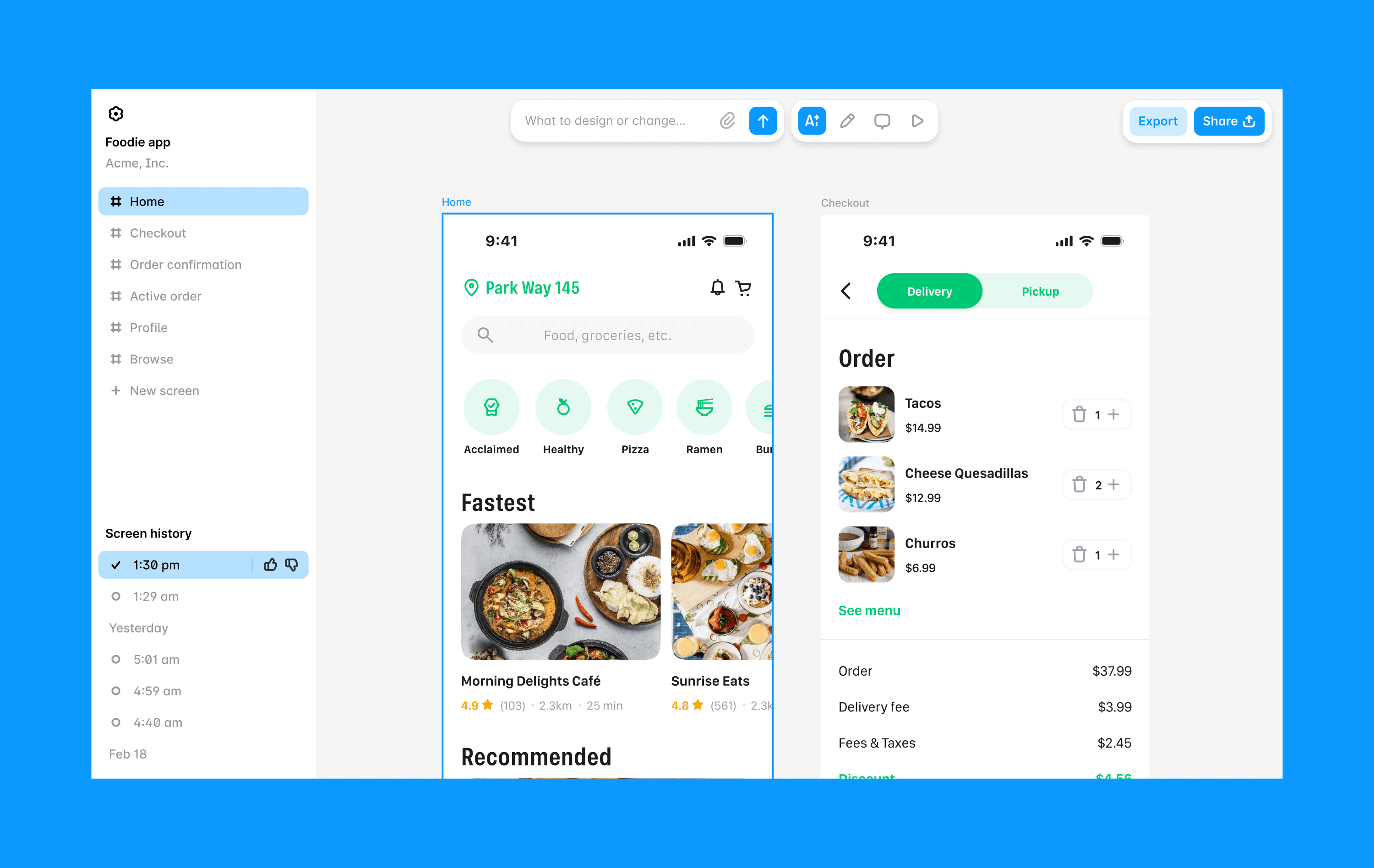
Banani focuses on generating editable UI designs and prototypes from prompts, references, or product documents. It is built for teams that want visual clarity before writing code.
Why it matters:
Generates UI designs and interactive prototypes using AI
Works well for early product discovery and iteration
Supports exporting to Figma, image, and HTML/CSS
Fixed pricing with no credits or tokens
Easy to share designs with stakeholders
Strengths: Predictable pricing, strong UI output, great for early alignment, strong integration with Figma
Limitations: Does not generate backend or application logic
Pricing: Free plan available. Paid plans use fixed pricing (at 20 and 30 USD per month)
Stitch
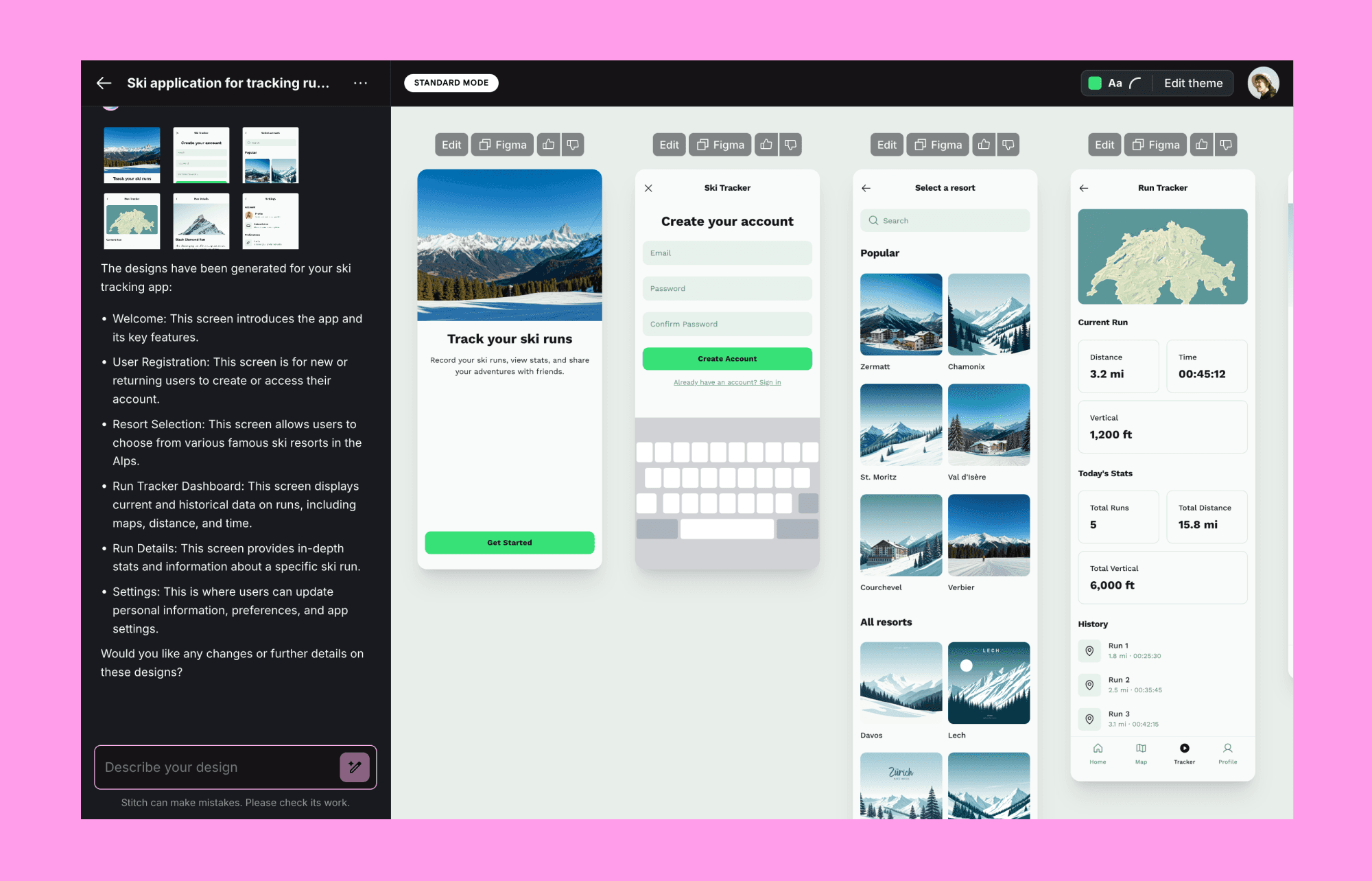
Stitch is a Google Labs tool that converts prompts into UI designs. It is intentionally simple and great for early ideation.
Best for: Prompt-to-UI design exploration
Why it matters:
Generates UI layouts from text prompts
Clean, minimal design output
Useful for brainstorming and concept testing
Zero setup required
Strengths: Free, fast, easy to try
Limitations: Limited customisation and Figma integration, no production workflows
Pricing: Free
Magic Patterns
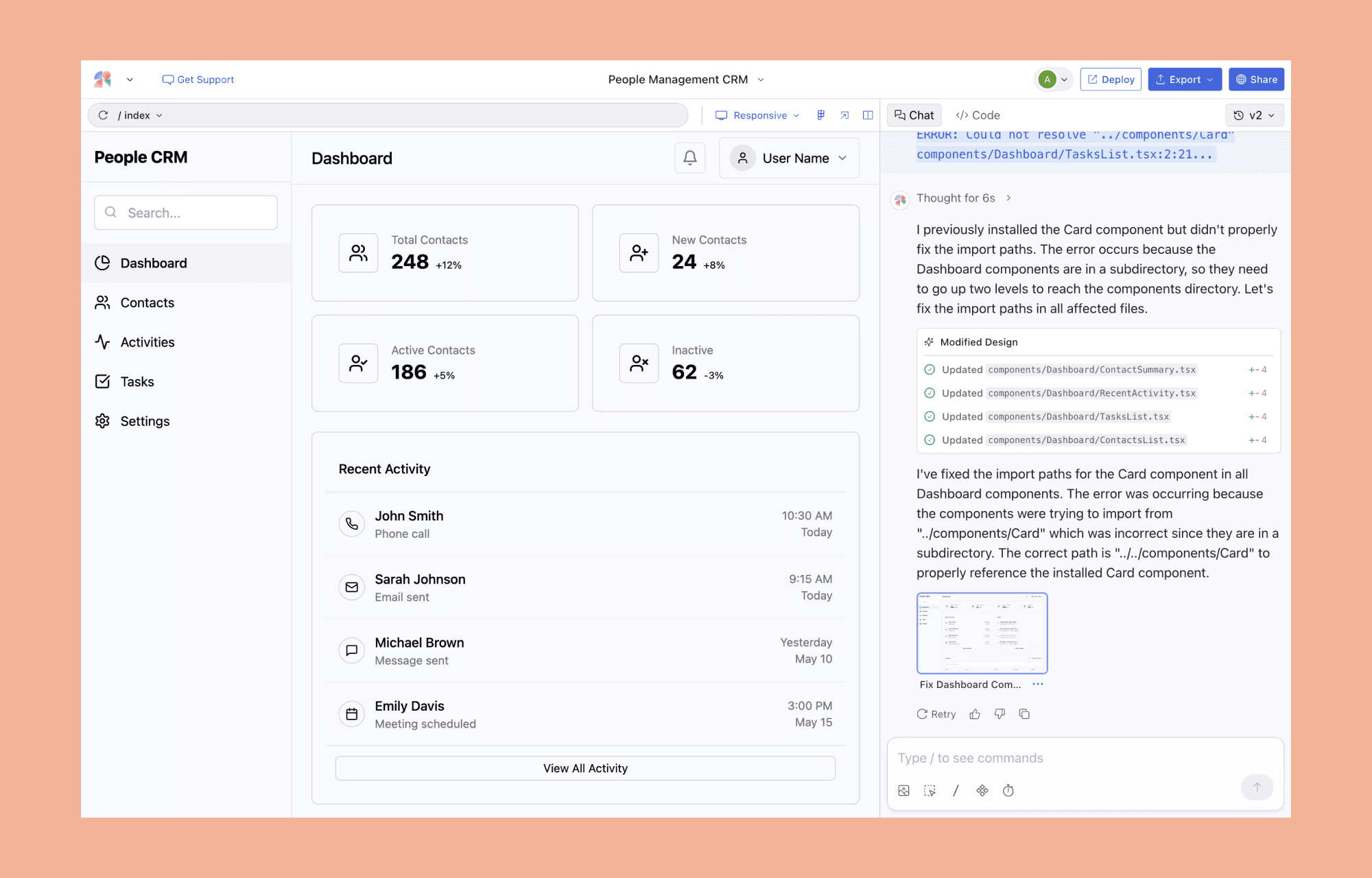
MagicPatterns helps teams generate UI that aligns with existing components and design systems.
Best for: Teams with established design systems
Why it matters:
AI-generated UI consistent with your system
Reduces repetitive layout work
Useful for product and design teams
Encourages visual consistency
Strengths: Design-system friendly, fast UI generation
Limitations: Less useful without an existing system
Pricing: Free trial available. Paid plans start at $19/month + usage-based fees
Full-Stack AI Builders
Lovable
Lovable generates app structures and flows from prompts and is best suited for quick demos and early validation.
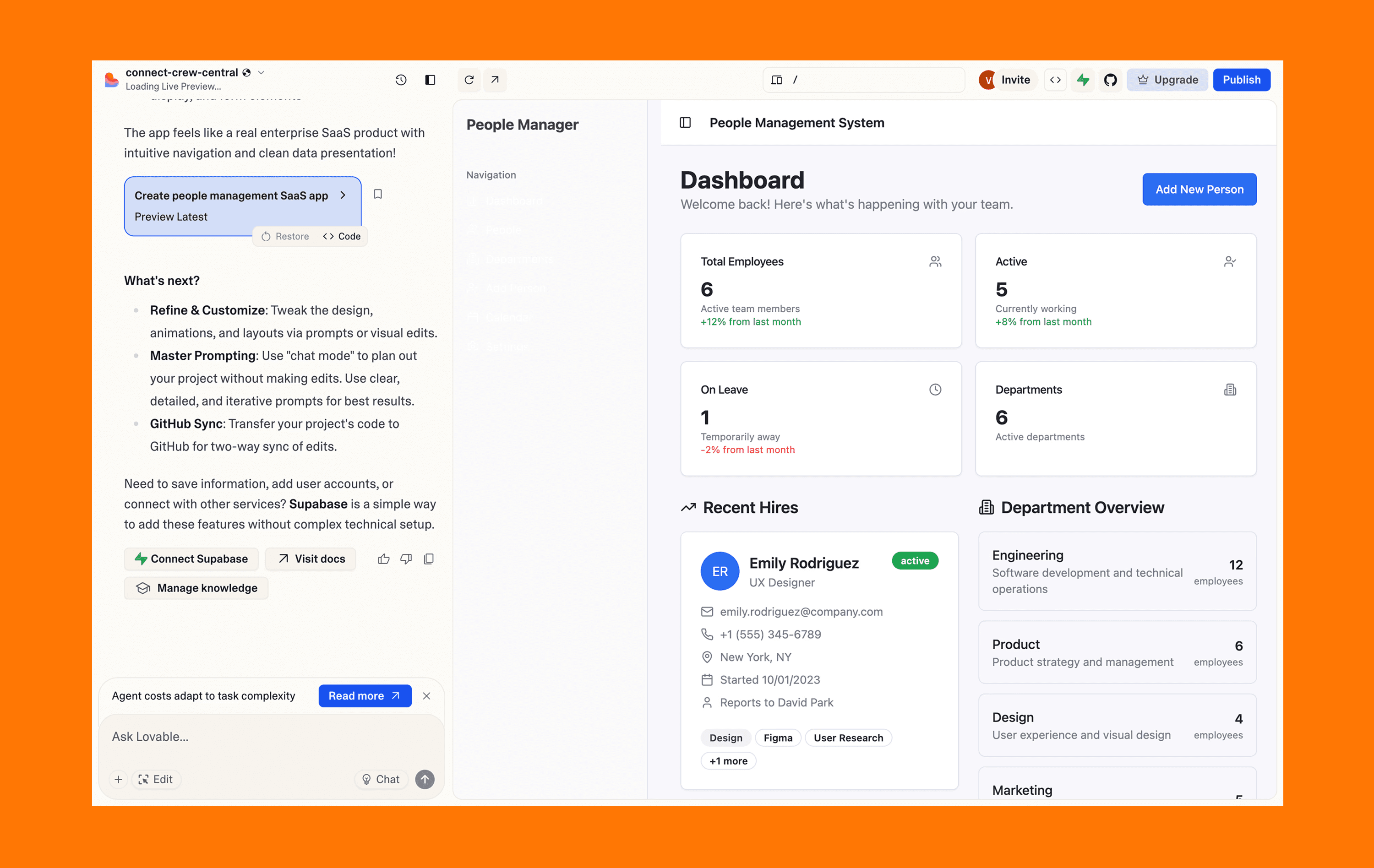
Best for: Prompt-first prototypes
Why it matters:
Very fast idea-to-app workflow
Minimal setup
Strong vibe coding feel
Good for testing concepts if you don't care about the looks
Strengths: Fast, beginner-friendly
Limitations: Credit-based pricing quickly ramps up costs, limited production control, and users report a generic UI
Pricing: Free trial available. Paid plans start at $25/month with token-based usage limits
See how Lovable compares to other AI design tools
Bolt.new
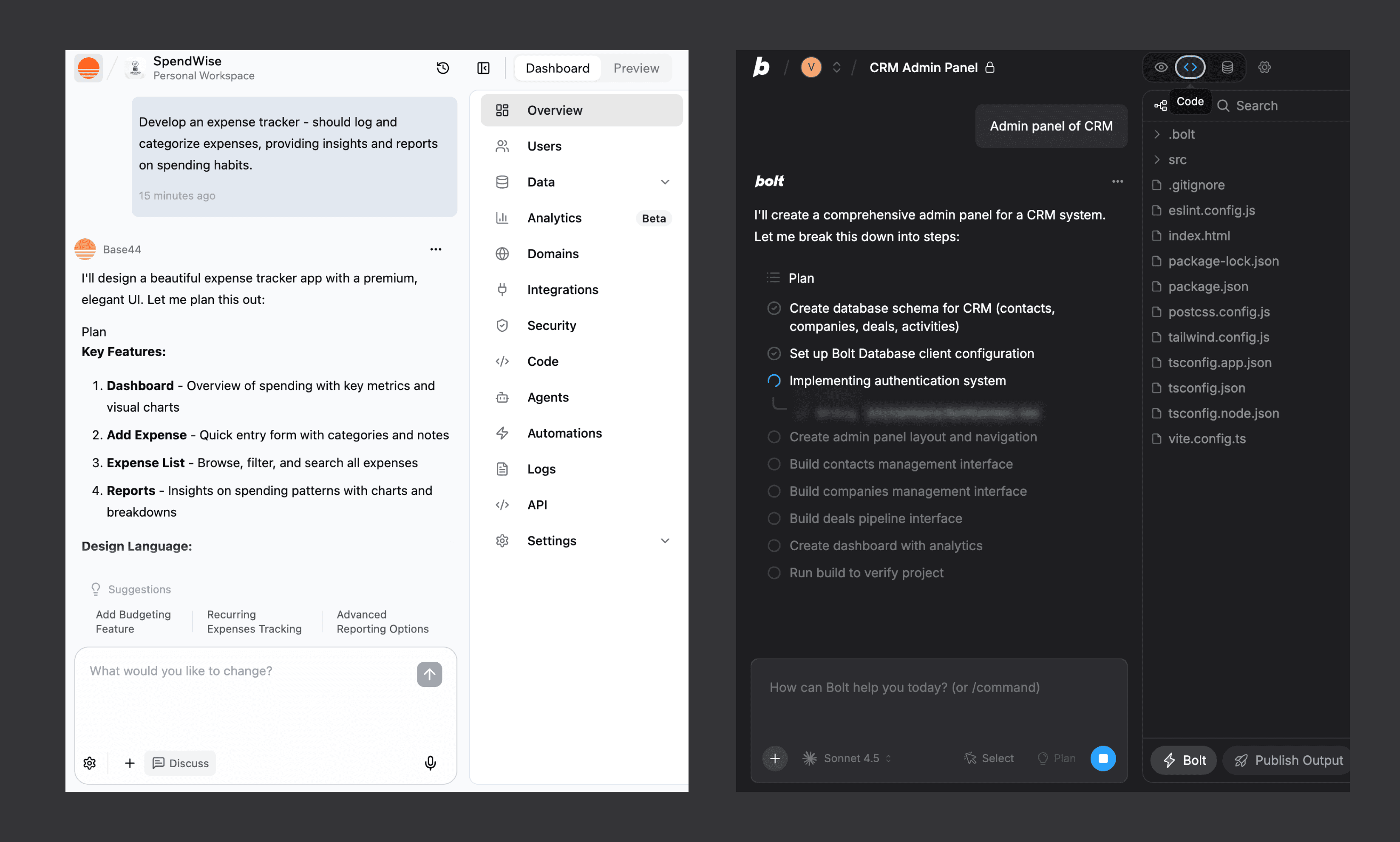
Bolt.new is one of the closest competitors to Base44. It generates complete applications from a single prompt and runs entirely in the browser.
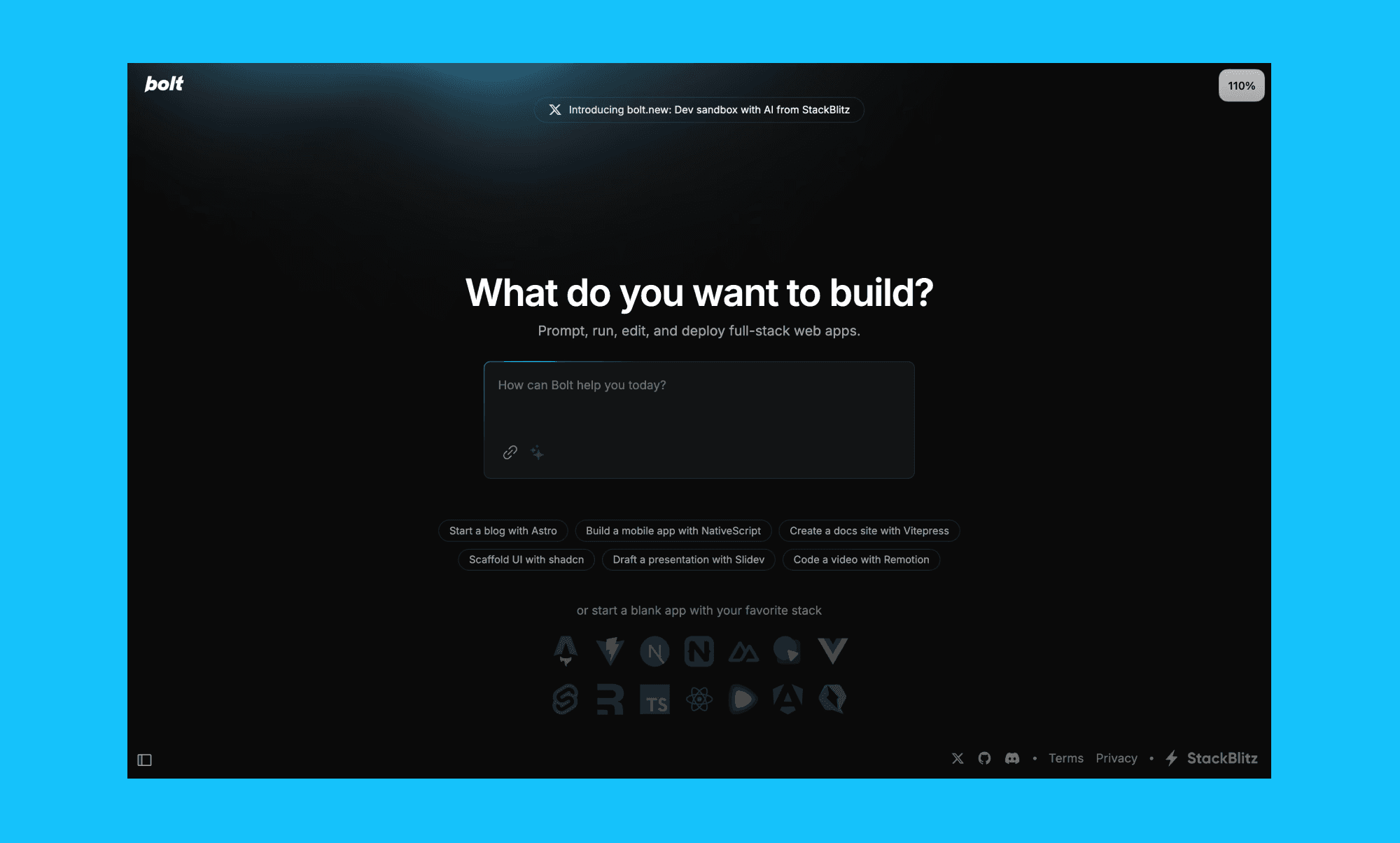
Best for: Full-stack vibe coding and MVPs
Why it matters:
Generates frontend, backend, and database
Built-in hosting and deployment
Active community and fast iteration
More control than most AI builders
Strengths: Full-stack output, browser-based dev
Limitations: Pricing scales with usage
Pricing: Free tier available. Paid plans start at $25/month with token-based usage limits
a0.dev
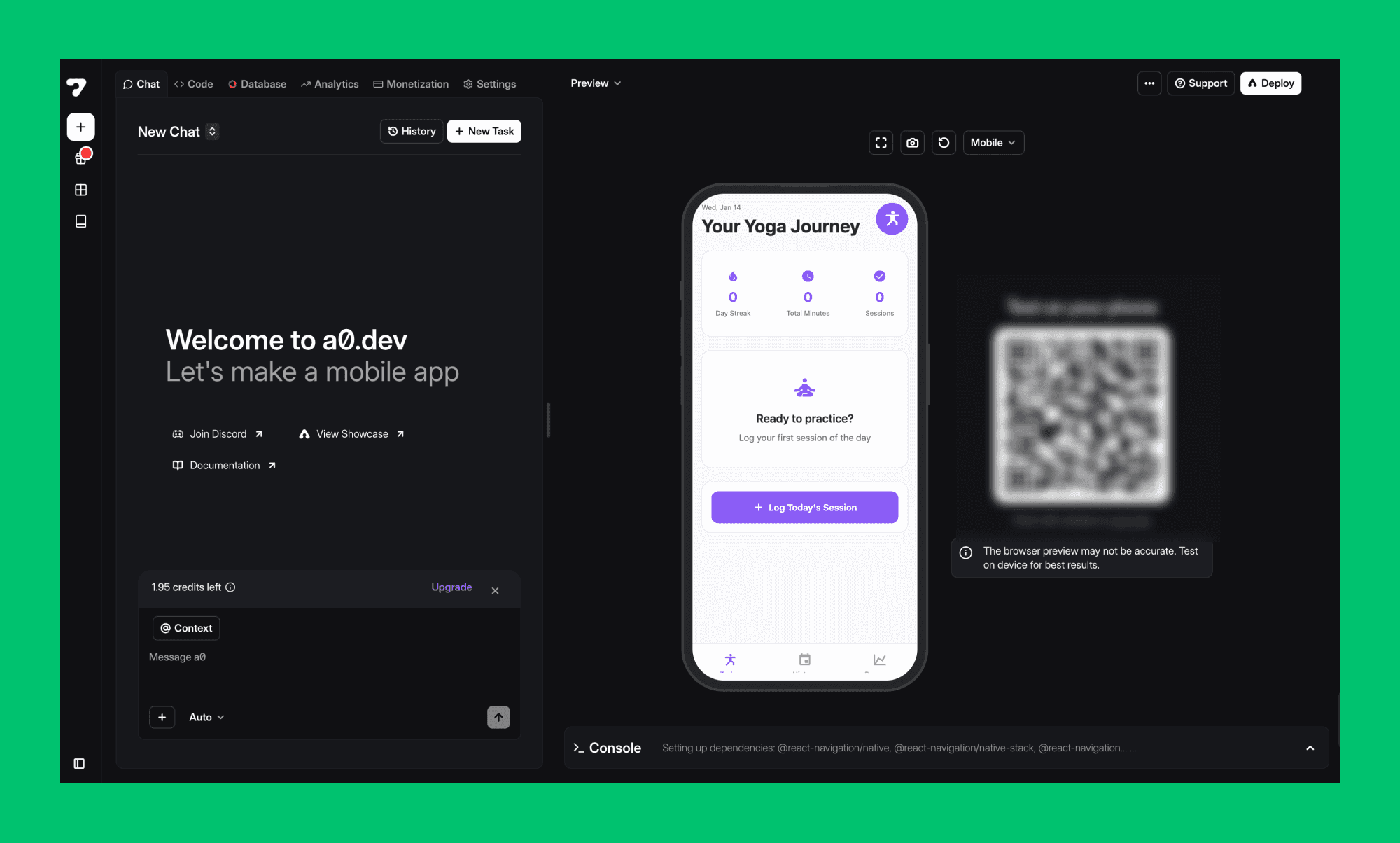
a0.dev focuses on building iOS and Android apps with AI, including deployment workflows.
Why it matters:
Generates mobile apps from prompts
Handles App Store and Play Store steps
Mobile-first approach
Faster than traditional mobile stacks
Strengths: Strong mobile focus, deployment included
Limitations: Less flexible for web apps
Pricing: Starts at 20 USD/month + usage-based fees
Builder.io
Builder.io combines visual editing with real production frameworks and existing codebases.
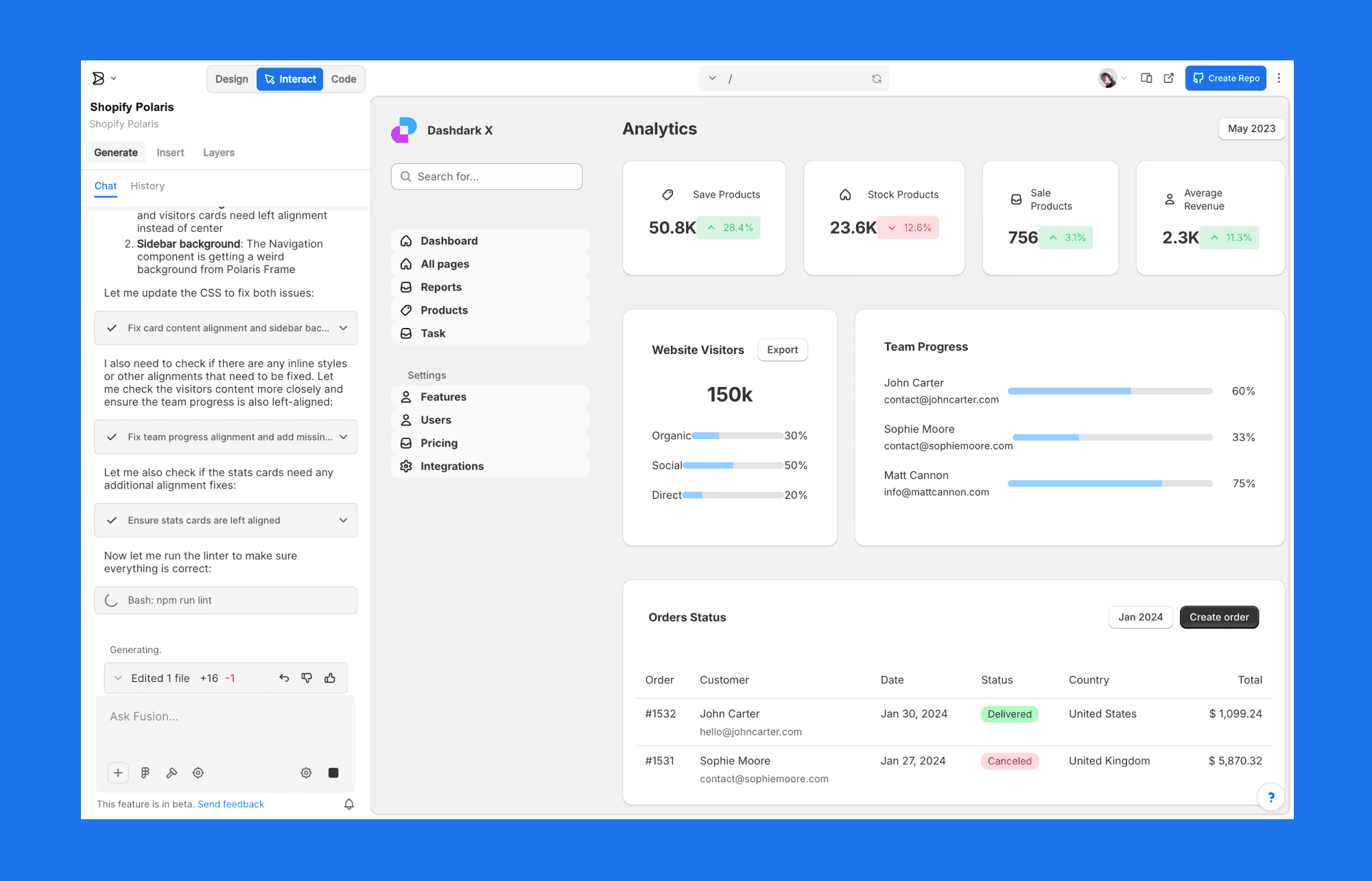
Best for: Visual development at scale
Why it matters:
Works with modern frontend frameworks
Figma integration
Enterprise-ready features
Balances designers and developers
Strengths: Production-ready, flexible
Limitations: Heavier setup than pure AI tools, token-based pricing
Pricing: Paid plans start at $25/month + usage-based fees
No-Code Platforms
Bubble
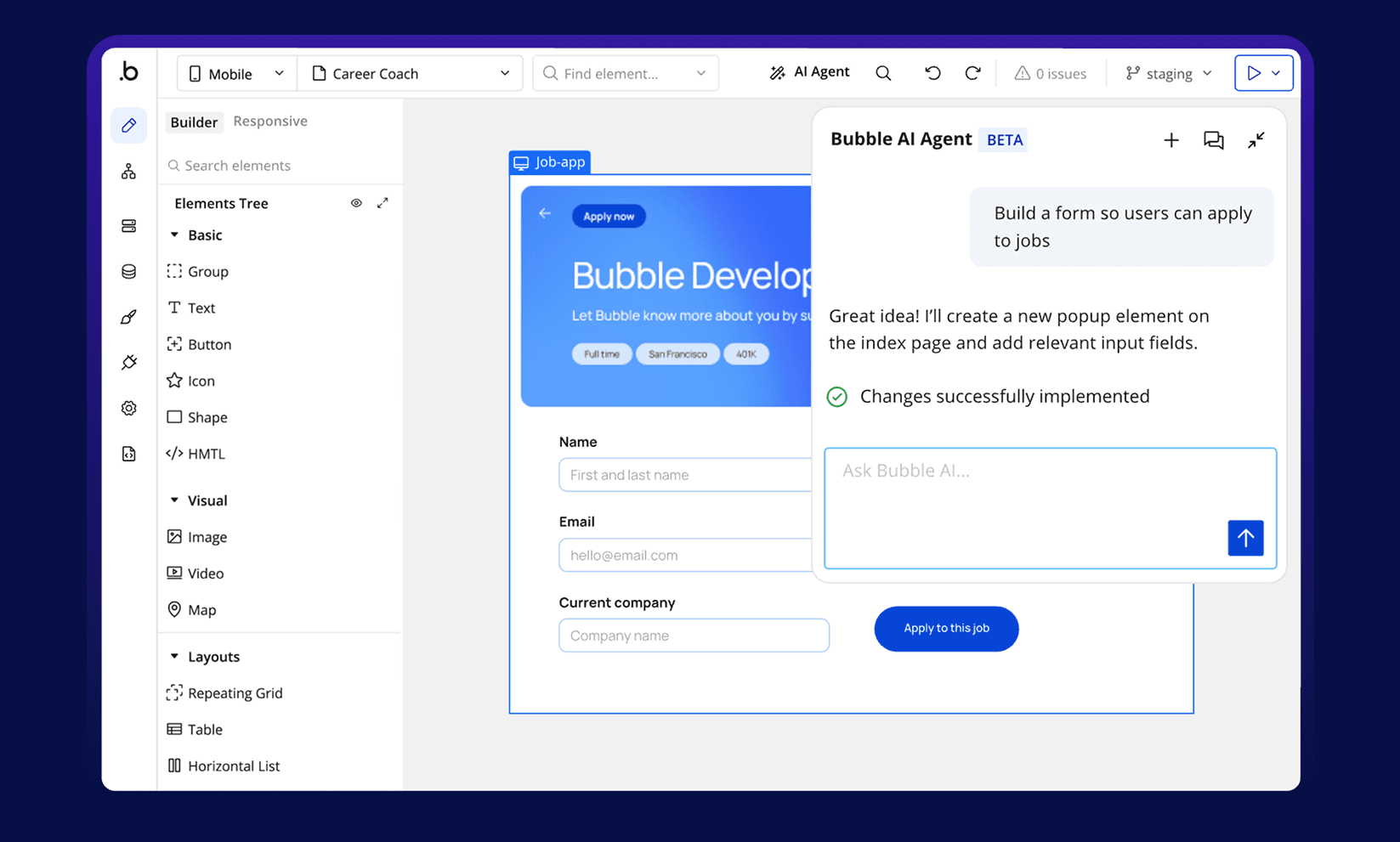
Bubble lets you build full web applications using visual workflows instead of traditional code. Bubble is popular among non-technical founders building startups who need full-stack capabilities.
Best for: No-code web apps
Why it matters:
Handles logic, database, and UI
Large plugin ecosystem
Suitable for MVPs and internal tools
Strong community
Strengths: Powerful no-code platform for building complex web apps with logic, workflows, and a built-in database.
Limitations: Steep learning curve and performance tuning is often needed as apps scale.
Pricing: Free plan available. Paid plans start at $29/month.
Learn more about how to design UI using AI and other AI design approaches.
Glide
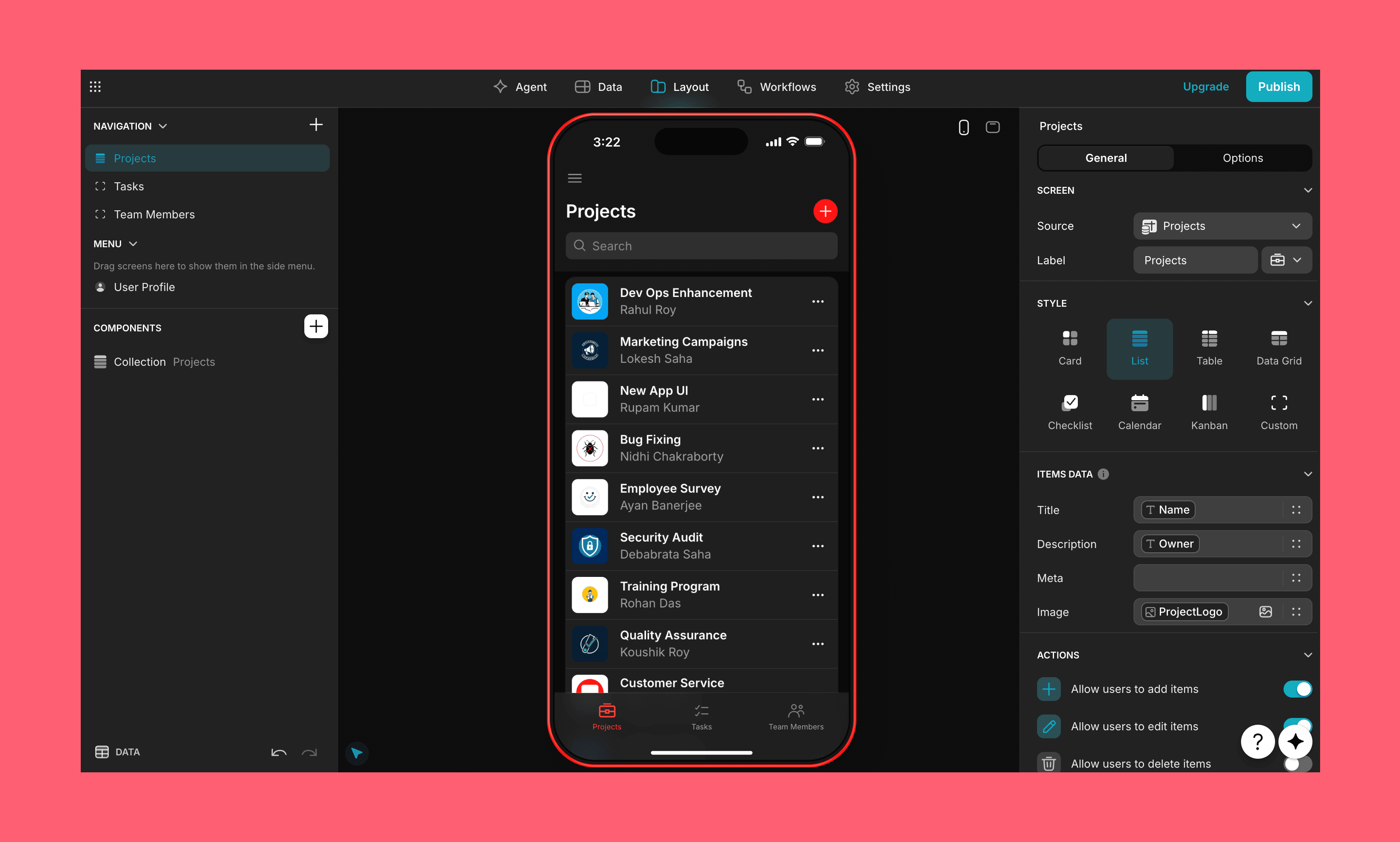
Glide specifically connects to Airtable, Google Sheets, or Excel to create apps. It is less flexible than Base44, but that is intentional.
Best for: Apps built on existing data
Why it matters:
Extremely fast setup from spreadsheets
Clean UI defaults
Ideal for dashboards and internal tools
Constraints help teams ship faster
Strengths: Extremely fast way to build apps from Airtable, Google Sheets, or Excel, especially for internal tools.
Limitations: Limited flexibility for custom UI or complex logic beyond data-driven workflows.
Pricing: Free plan available. Paid plans start around $25/month.
Developer-First Tools
Replit
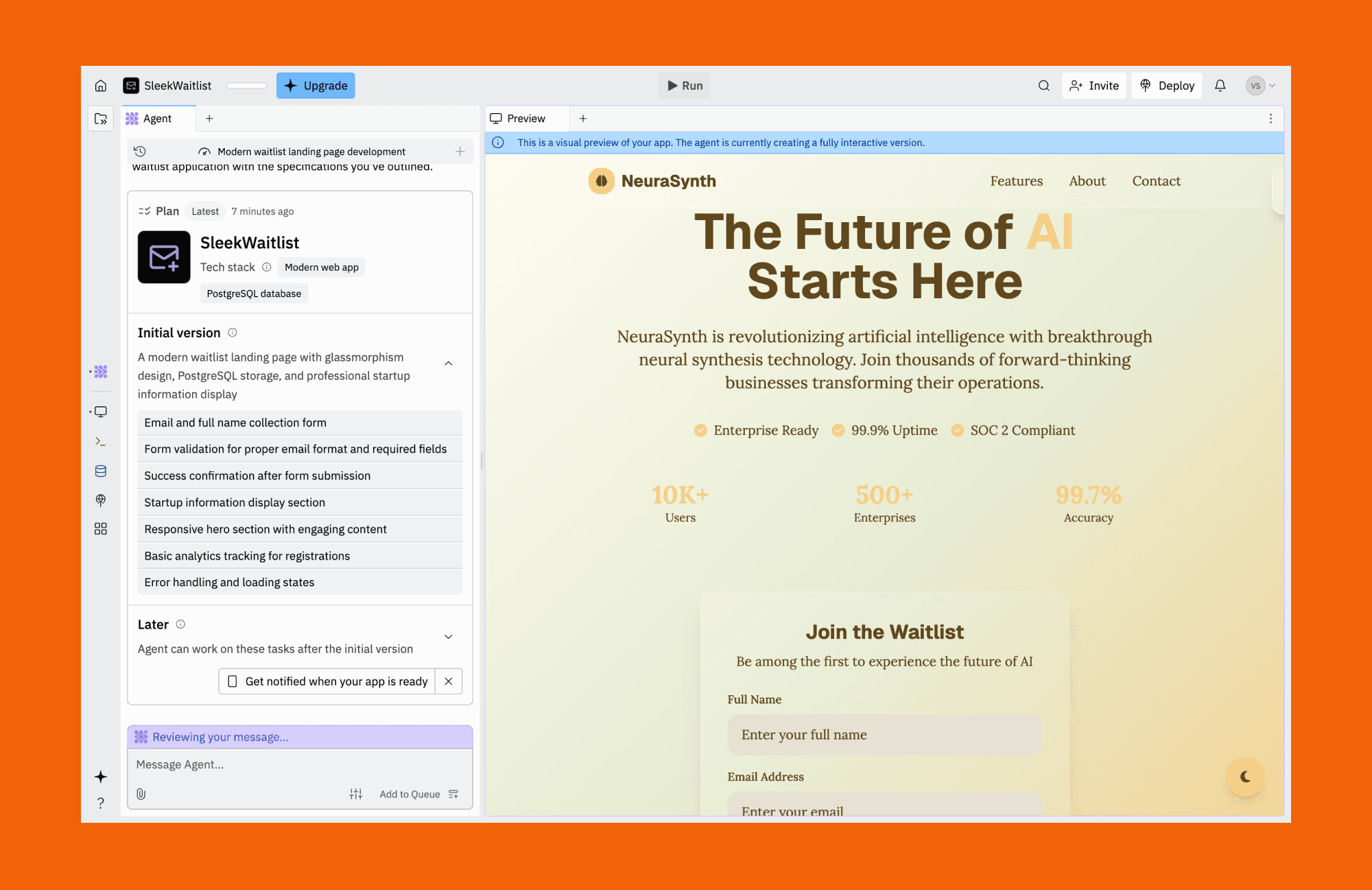
Replit combines a browser-based IDE with AI tools for writing and debugging code.
Best for: AI-assisted development
Why it matters:
Real code and real frameworks
AI assists instead of abstracting everything
Great for learning and prototyping
Supports full-stack projects
Strengths: Easy, zero-setup cloud IDE with strong collaboration and multi-language support.
Limitations: Credit-based pricing and performance issues can surface on larger projects.
Pricing: Free plan available. Paid plans start at $20/month with token-based usage limits
Cursor
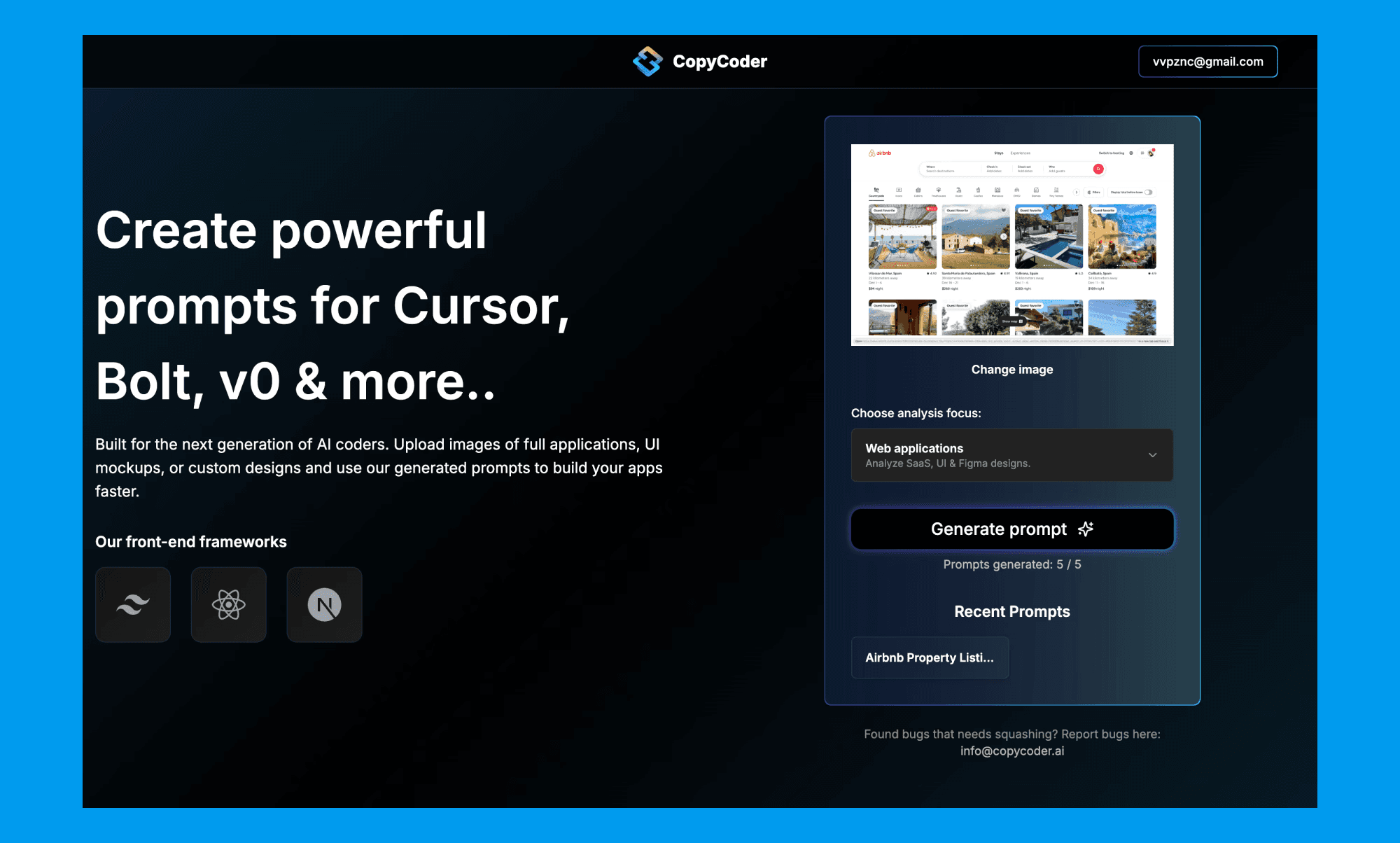
Cursor is an AI-powered editor that understands your entire codebase.
Best for: AI inside your code editor
Why it matters:
Excellent for refactoring and debugging
No platform lock-in
Works with existing projects
Speeds up daily development
Strengths: Deep understanding of existing codebases, excellent for refactoring and debugging.
Limitations: Requires coding experience and does not handle deployment or app scaffolding.
Pricing: Free tier available. Paid plans start at $20/month with token-based usage limits
Specialised Tools
Retool
Retool is designed for building serious internal applications.
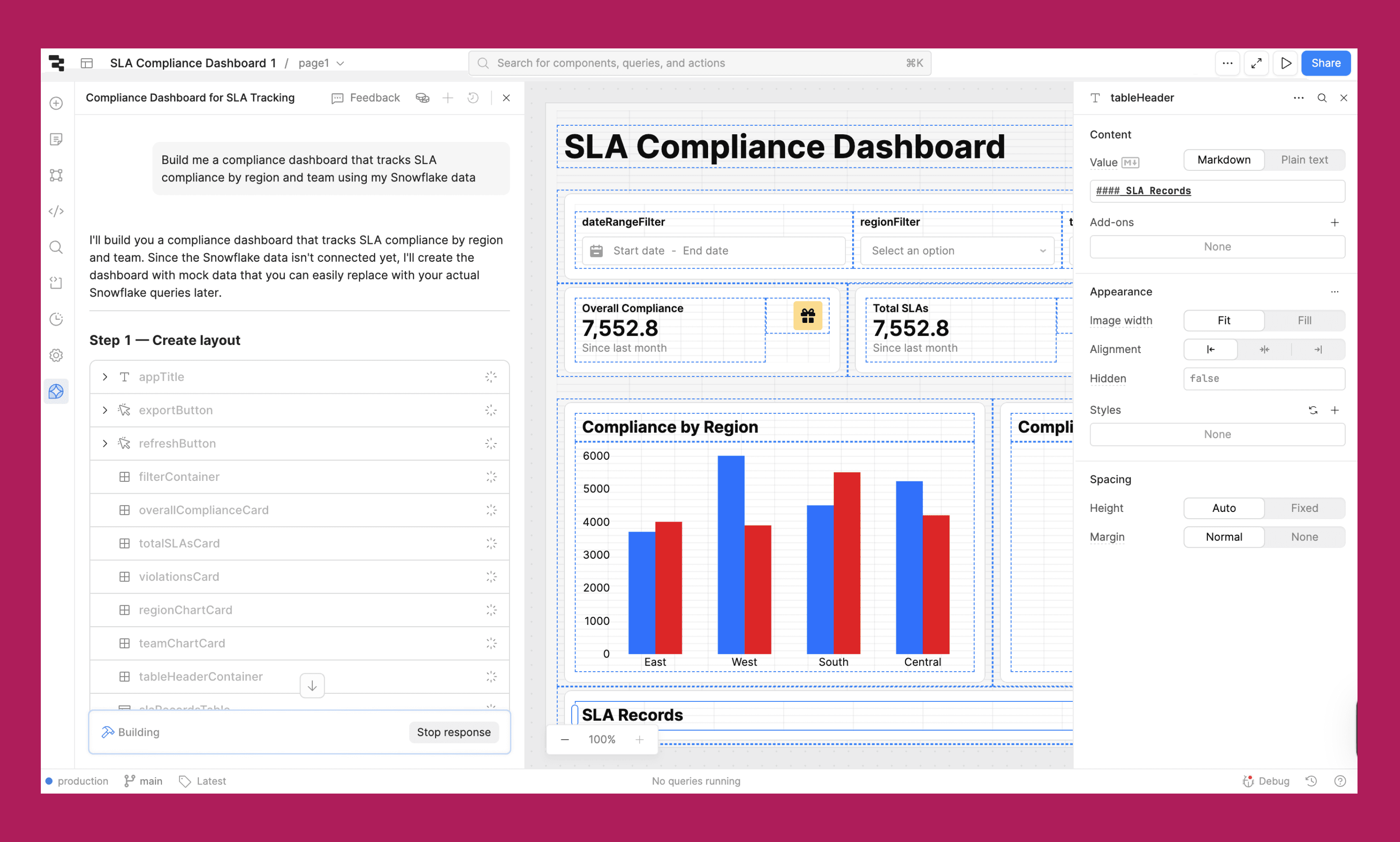
Best for: Internal tools
Why it matters:
Connects to almost any database or API
Strong access control
Production-ready tooling
Trusted by engineering teams
Strengths: Excellent for building internal tools with strong database and API integrations.
Limitations: Not suited for customer-facing apps and can get expensive with large teams.
Pricing: Free tier available. Team plans start around $20/user/month + usage-based fees
Vercel v0
v0 generates frontend UI components from prompts.

Best for: AI-generated UI components
Why it matters:
High-quality React components
Modern frontend stack support
Fast UI scaffolding
Unlike Base44, v0 stays firmly in frontend territory. That means no database, no auth, no backend logic. Just clean React components you can drop into your existing stack.
Strengths: Generates high-quality React UI and some backend code like server actions and API routes.
Limitations: Backend output is limited to code snippets and does not handle databases, auth, or infrastructure.
Pricing: Free tier available. Paid plans start around $20/month + usage-based fees
Firebase
Best for: Backend infrastructure
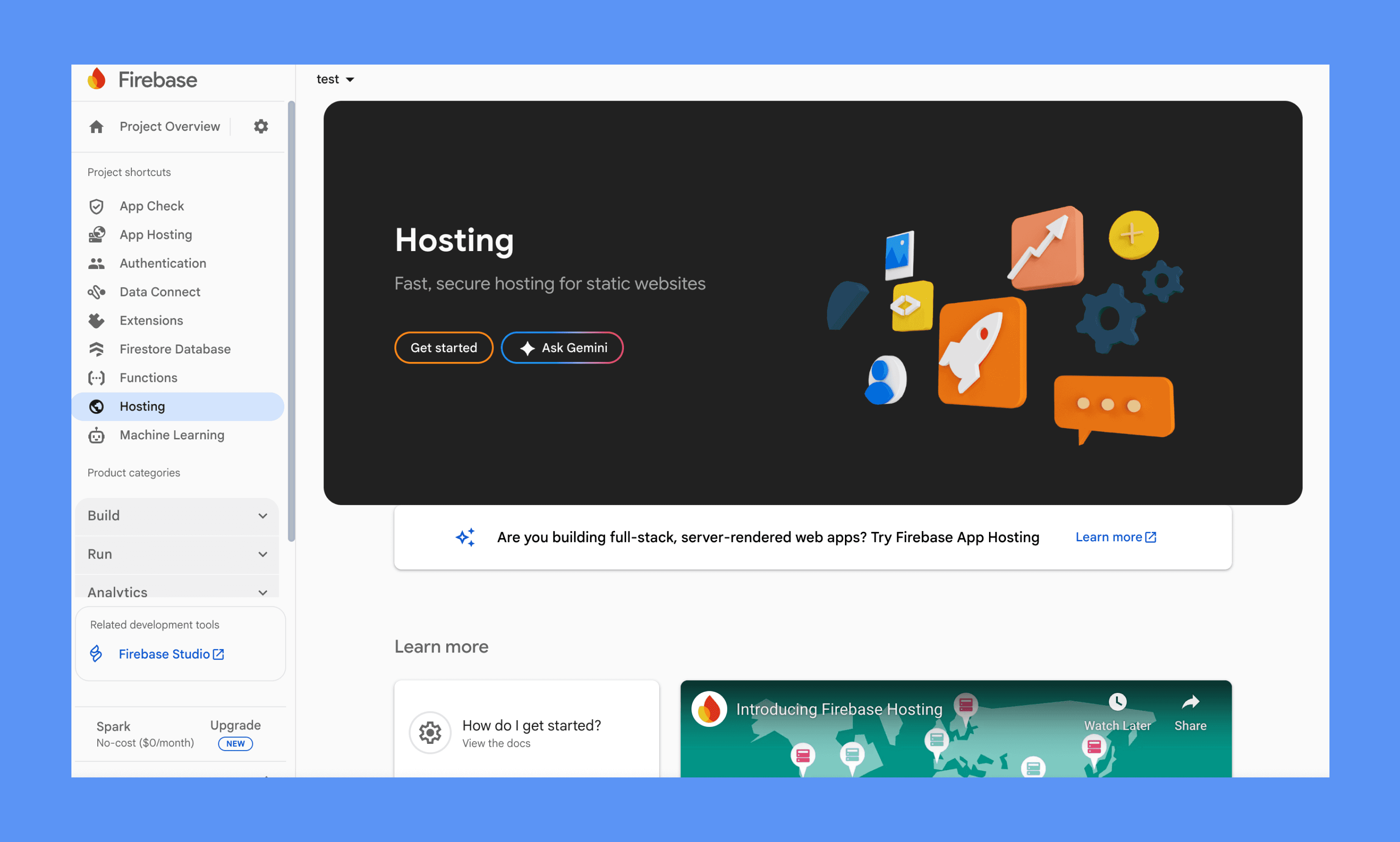
Firebase handles authentication, databases, hosting, and serverless functions. You really can build a lot with it, but be prepared do most of the things manually, so back to the old school.
Why it matters:
Proven at scale
Strong integrations
Reliable infrastructure
It lacks vibe coding appeal, but it is battle-tested infrastructure that scales. If Base44 generates the frontend, Firebase can handle everything behind it.
Strengths: Battle-tested backend infrastructure with auth, databases, hosting, and serverless functions.
Limitations: Usage-based pricing can be hard to predict and vendor lock-in is a real concern.
Pricing: Free tier available. Paid plans have complex usage based pricing.
Base44 Alternatives: FAQ
What is the best free Base44 alternative?
Stitch is completely free with no limits. Vercel v0, Banani, and Replit all offer free plans, but with usage limits or feature restrictions. For unlimited free UI generation, Stitch is your only option. For testing with generous free tiers, try Banani.
Which Base44 alternative is best for mobile apps?
a0.dev is the strongest option for mobile-focused apps, especially if you want help with App Store and Play Store deployment.
Is Bolt.new better than Base44?
Bolt.new offers more code visibility and control, while Base44 focuses on fast, opinionated generation. If you want to focus on UI first before generating code, tools like Banani offer a different approach entirely. The better choice depends on whether you prioritize speed, control, or design quality.
Can I export code from these Base44 alternatives?
Tools like Bolt.new, Replit, Cursor, and a0.dev allow full code export with a backend. Design-focused tools like Banani can export to Figma, HTML/CSS, and design files, making them ideal for handing work off to developers. In contrast, Firebase is a backend-only infrastructure service.
Which tools offer fixed pricing instead of credits?
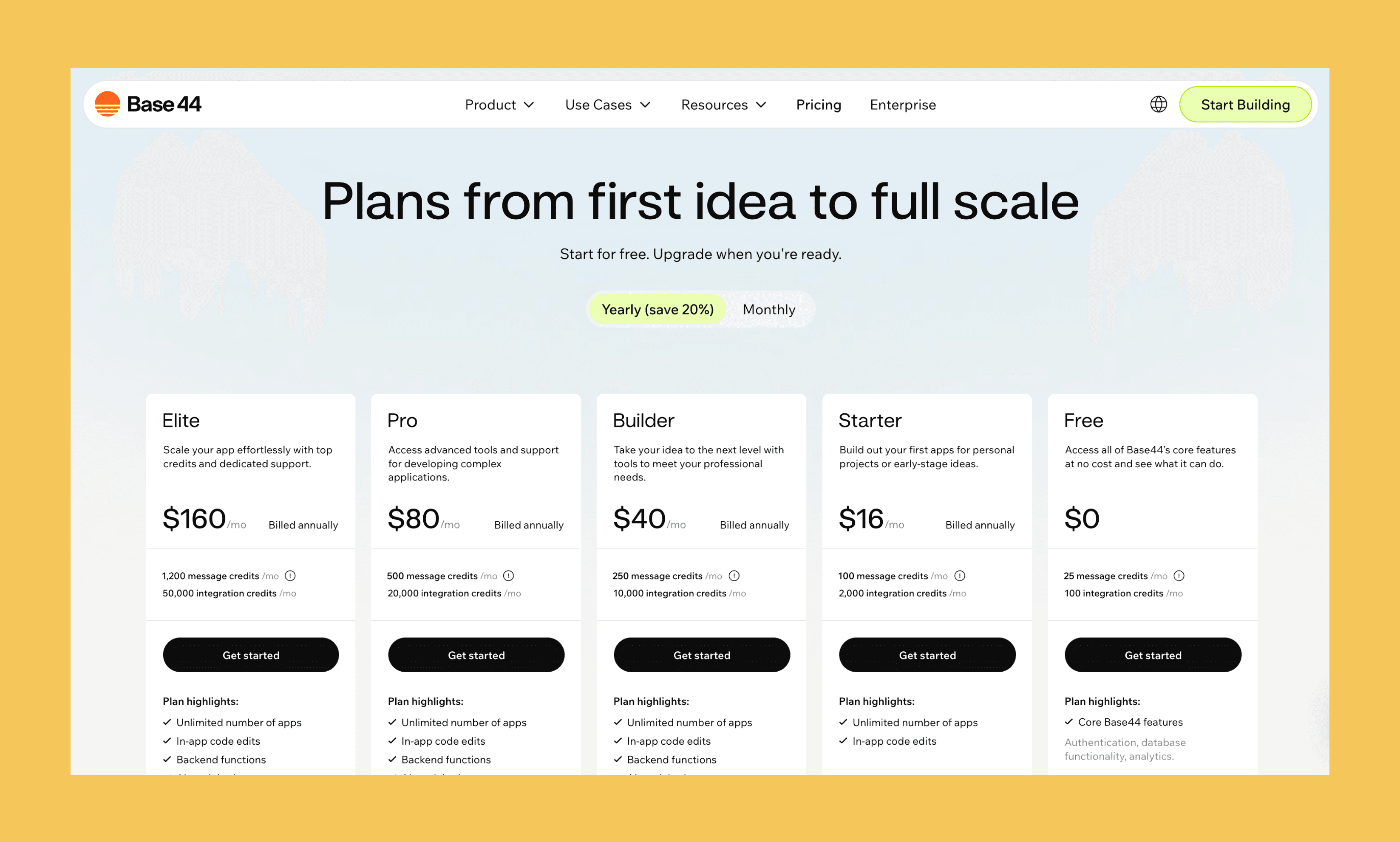
Banani uses fixed monthly pricing with no credits or usage limits. Bubble, Replit, and Glide have clear tiered plans, but also utilise token system. Builder.io offers tiered plans but also charges usage fees, so read the fine print.
What’s the cheapest Base44 alternative?
For UI design only: Stitch (free) and Banani ($20/month fixed) offer the best value.
For full coding: Vercel v0 ($20/month) and Replit ($20/month) are most affordable.
For no-code apps: Glide and Bubble start around $25-29/month.The "cheapest" depends on whether you need design tools, coding environments, or full apps.
Do any Base44 alternatives work with Figma?
Yes. Banani, Builder.io, Stitch, and MagicPatterns all integrate with or export to Figma workflows.
Which alternative is best for non-technical founders?
For non-technical founders, the best choice depends on your stage:
Early exploration (pre-code): Banani lets you visualize and iterate on UI before committing to development.
Building MVPs: Bubble and Glide let you build working apps without code, though they require time to learn.
Design handoff: Banani creates designs that developers can implement, avoiding the "no-code trap" if you eventually need custom development.
How to Choose a Base44 Alternative
The best alternative depends on where you are in the building process:
Stage 1: Still figuring out what to build?
→ Start with Banani or Stitch to explore UI directions visually
→ These help you align with stakeholders before code exists
Stage 2: Ready to prototype fast?
→ Lovable, Banani or Bolt.new for quick full-stack demos
→ a0.dev if building mobile-first
→ Bubble if you prefer visual no-code workflows

Stage 3: Moving to production?
→ Replit or Cursor if you want AI help but need code control
→ Retool if building internal tools for teams
→ Firebase + Vercel v0 if you want component-based architecture
Not sure which stage you're in? Start with Banani to create UI designs and prototypes. Once your direction is clear, choose a full-stack tool to build it. This two-step approach prevents wasted development time on unclear ideas.
Final Thoughts
Base44 is a strong entry point into AI-powered app building, but it is not the only option. Different stages of building call for different tools.
Some teams need UI clarity first. Others need infrastructure. Some want predictable pricing.
Use the comparison table above to quickly identify which tools match your priorities, whether that is AI power, UI control, or production readiness.
This guide was written by the Banani team based on hands-on testing of AI app builders and design tools. We regularly update this comparison as new tools launch and pricing changes.


